
Description
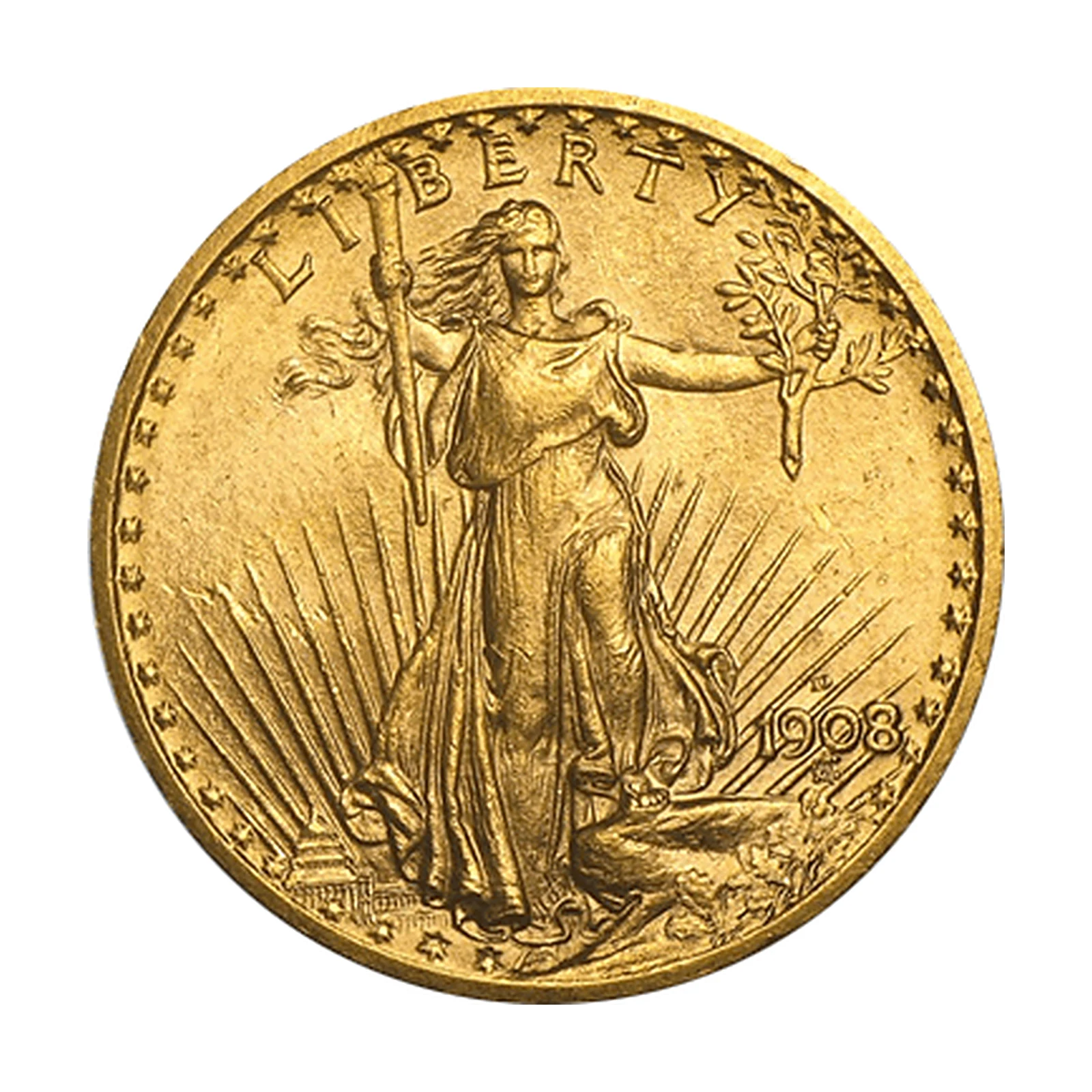
At the urging of President Theodore Roosevelt, sculptor Augustus Saint-Gaudens redesigned the $20 gold coin in 1907, creating a design many collectors regard as the finest in American coinage. The earliest strikes used very high relief; the design was soon adjusted to a lower relief so it could be produced in volume. Production of all U.S. gold coins ended in 1933 under Executive Order 6260.
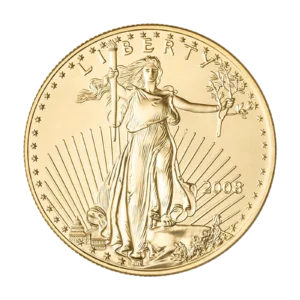
The obverse shows a full-length Liberty striding forward with a torch and an olive branch, emblems of enlightenment and peace, with rays of sunlight and the U.S. Capitol behind her. The reverse depicts a bald eagle in flight above a rising sun. The design proved so enduring that the U.S. Mint revived Saint-Gaudens’ Liberty in 1986 for the modern American Gold Eagle.
Each coin is .900 fine gold alloyed with copper, weighs 33.436 grams and contains about 0.9675 troy ounces of gold. It measures 34 mm across and carries a $20 face value.
The coins offered here are certified MS-64 by an independent grading service. On the 70-point Sheldon scale, MS-64 indicates an uncirculated coin with only minor marks. Their value combines gold content with a numismatic premium that depends on grade, date, mintmark and collector demand. Pre-1933 U.S. gold coins are treated as collectibles and are not eligible for IRAs; they are offered for direct ownership.