

Description
Palladium is one of the platinum-group metals and is prized above all for its industrial role. Most palladium demand comes from catalytic converters that reduce vehicle emissions, with additional use in electronics, dentistry and jewelry. Mine supply is concentrated in a small number of regions, and the combination of industrial demand and concentrated supply has produced some of the largest price swings in the precious-metals market.
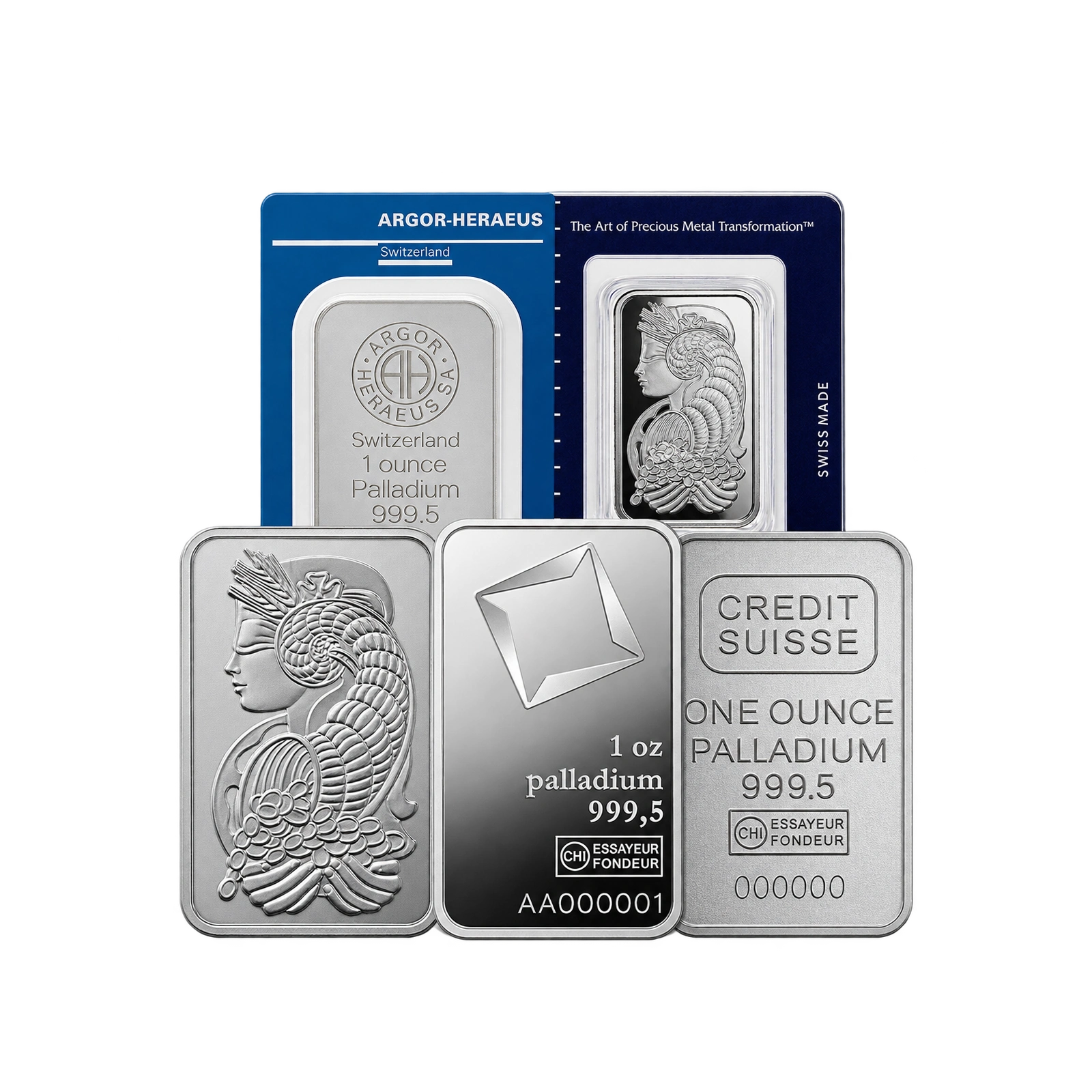
A one-ounce palladium bar is valued on its metal content. Bars are produced by a relatively small number of refiners and are typically .9995 fine, the standard widely used for investment palladium. Each bar is stamped with the refiner’s mark, the weight, the fineness and usually a serial number, and is commonly sealed in an assay card that documents its authenticity.
Investors generally treat palladium as a specialized, higher-risk part of a precious-metals allocation rather than a core holding. Because the palladium market is smaller than the gold market, dealer spreads can be wider, so it is worth asking about current buy and sell prices before purchasing.
The refiner supplied varies with inventory and is confirmed in writing before you buy. Palladium bars that meet the .9995 purity standard may be held in a self-directed IRA, although fewer custodians and depositories handle palladium than gold or silver.