
When it comes to protecting your wealth and managing your investment portfolio, gold has always been considered a haven. However, as the world of investments evolves, the ways to invest in gold are changing too. Whether you are planning to invest in gold by buying physical gold, gold ETFs, or even gold mining stocks, each option has its own set of pros and cons.
At Opulent Gold Group, we know that selecting the right gold investment can be daunting. That’s why we have designed this ultimate guide to help you walk through the three most popular ways of investing in gold: physical gold, gold ETFs, and gold mining stocks. In this article, we will discuss the differences, pros, and cons of each investment option so that you can make the right decision about which one suits your financial objectives.
Are you looking for a secure investment in physical gold, the convenience of gold ETFs, or the high-risk/high-reward potential of gold mining stocks? Let’s explore each of these gold investment options so that you can make the right decision.
Understanding the Basics of Gold Investment Options
Before you choose the gold investment option that best suits you, it is essential to understand the basics of each option. Gold has long been a symbol of wealth and prosperity, but the investment options available in gold are quite different. Let’s discuss the three main ways in which you can invest in gold.
What is Physical Gold?
Physical gold is a representation of actual gold in the form of gold coins, gold bars, and gold bullion. When you invest in physical gold, you are essentially buying it, meaning you own it. This has been the traditional way of investing in gold for many years and remains a popular choice among investors seeking security and wealth preservation.
If you’re thinking about securing your retirement, you might want to consider a gold IRA as a way to add stability to your portfolio.

What are Gold ETFs?
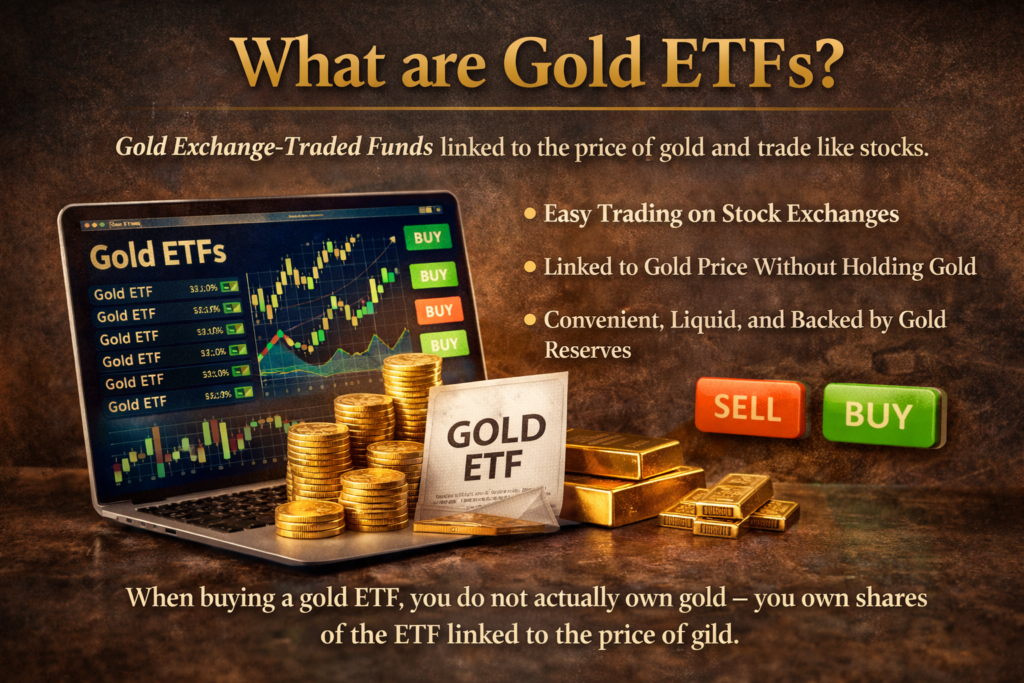
Gold Exchange-Traded Funds (ETFs) have emerged as a popular investment option for those who want to invest in gold without holding it in their portfolios. Gold ETFs are linked to the price of gold, providing investors with an opportunity to invest in gold without the hassles of holding gold. They are listed on stock exchanges, similar to stocks, and can be bought and sold throughout the day.
The main advantage of gold ETFs is their liquidity. Investors can easily trade their shares in the market, and since these shares are backed by gold reserves, they provide a convenient and inexpensive way to invest in gold. However, it should be noted that when you own an ETF, you do not own gold; you are also exposed to the ETF’s performance.
There are many ways in which you can invest in physical gold, ranging from buying gold bars and gold coins from a gold dealer to owning gold jewelry and collectibles. While investing in physical gold has its benefits, it also has its drawbacks, such as the need to store and insure the gold.
For those looking to incorporate gold into their retirement savings, converting your IRA into gold could be a great move. Consider exploring how to convert IRA to gold to make the most of this precious metal’s value.
What are Gold Mining Stocks?
Investing in gold mining stocks involves a slightly different strategy. Instead of investing in gold, you are investing in companies that mine gold. Gold mining stocks offer a way to profit from gold indirectly, as the companies’ financial performance is often closely tied to gold’s price. But gold mining stocks also involve additional risks and rewards.
Gold mining stocks can offer investors the potential for high returns, especially if the mining company discovers new gold deposits or optimizes its operations. Additionally, many gold mining companies pay dividends, offering the potential for passive income. But the performance of gold mining stocks is not solely dependent on gold prices; company management, efficiency, geopolitical events, and mining costs also influence it.
Each of these three investment options has its own set of characteristics, and it is important to understand them to determine which one best aligns with your investment plans. Let’s move on to the pros and cons of each investment option to help you make a well-informed decision.
If you’re interested in diversifying your retirement savings, you might want to look into 401k to gold options, which can allow you to invest in gold without the complexities of physical ownership.

Pros and Cons of Investing in Physical Gold
Investing in physical gold has been a reliable way of preserving wealth for centuries, but it also has its own advantages and disadvantages. It is important to know both to decide whether it aligns with your investment objectives.
Benefits of Physical Gold
- Physical Gold as a Tangible Asset with Intrinsic Value
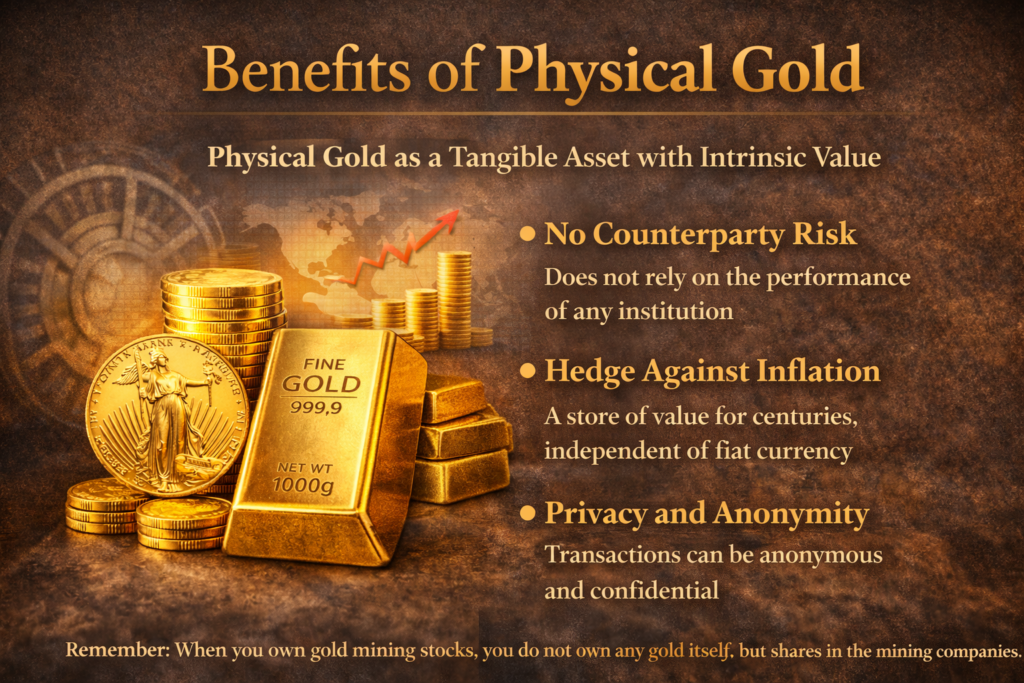
The first benefit of physical gold is that it is a tangible asset. Physical gold is something that you can hold in your hands. This is a big advantage, especially during times of economic uncertainty. Gold has been proven to be a store of value for centuries, making it a great hedge against inflation and currency devaluation.
- No Counterparty Risk
Another benefit of physical gold is that it eliminates counterparty risk. This means that physical gold does not rely on the performance of any institution. Physical gold is an asset outside the banking system, which makes it very attractive to people concerned about the stability of financial institutions, especially during economic downturns.
- Privacy and Anonymity
Another benefit of physical gold is that it offers investors privacy and anonymity. This is a big advantage over other forms of investment. When you buy physical gold, especially in smaller units such as gold coins or bars, the transaction is anonymous (though in some countries you may have to report purchases of larger amounts of gold).
Disadvantages of Physical Gold
- Storage and Insurance Costs
Physical gold is a safe investment, but it must be stored properly to avoid loss, theft, or damage. Some investors choose to store their gold in a safe vault or safety deposit box, which may have high annual charges. In addition, it is important to consider insuring your gold, which will further increase costs. If you decide to store your gold at home, you may be at risk of theft or damage, especially if it is not stored properly.
- Lack of Passive Income
Gold, unlike stocks or bonds, does not generate any income in the form of dividends or interest. The only source of income for gold is its appreciation in value. If you are looking for an investment that will provide passive income, physical gold may not be the best choice unless you plan to sell it for a higher price in the future.
- Price Premiums and Liquidity Problems
When you buy physical gold, you have to pay a premium over the spot price, especially when you are buying smaller gold coins or bars. The premium depends on the dealer and the type of gold you are buying. On the other hand, although gold is liquid, selling physical gold can be more difficult than selling stocks or ETFs. You will need to find a good buyer, and there may be delays or additional costs when you liquidate your investment.
Gold ETFs: A Modern Approach to Gold Investing
Gold ETFs are a modern, efficient way to invest in gold without the hassles of owning physical gold. For many investors, gold ETFs are a simple and inexpensive way of investing in the gold market. But, like all other investments, gold ETFs also have their own set of benefits and pitfalls.
Why Investors Invest in Gold ETFs
- Convenience and Liquidity
One of the most attractive reasons to invest in gold ETFs is convenience. Gold ETFs are listed on stock exchanges, and hence they can be easily bought and sold, just like stocks, during market hours. This gives investors the flexibility to enter and exit their investments quickly. Also, you do not have to worry about storage and insurance, as the gold is warehoused in secure vaults by the fund.
- Lower Costs
Investing in gold ETFs is less expensive compared to buying and holding gold. You do not have to spend money on storage and insurance, and the fees are relatively low (usually around 0.4% to 0.5% per annum). This makes gold ETFs a cheap and efficient way to invest in gold.
- Transparency and Ease of Use
Gold ETFs are transparent, and hence their holdings and prices are disclosed on a regular basis, giving investors a clear idea of how their investment is doing. Also, the ease of investing in an ETF via a brokerage account makes it an attractive option for both new and experienced investors.
Risks of Investing in Gold ETFs
- Management Fees and Expenses
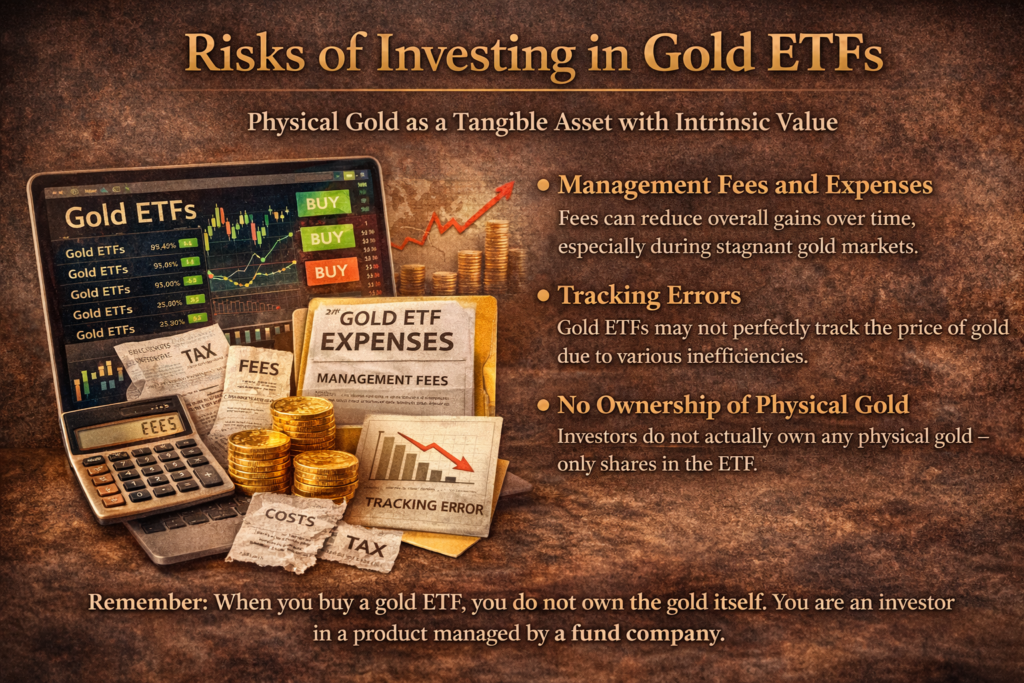
Although gold ETFs are less expensive compared to investing in physical gold, there are still management fees associated with gold ETFs. These fees are usually small but can add up over time. For long-term investors, the cost of management fees can slightly reduce the overall gains, especially if the gold market is not experiencing substantial price appreciation.
- Tracking Errors
Although gold ETFs are meant to track the price of gold, they may not necessarily track the price movements of gold. Tracking errors can arise due to various reasons such as management fees, changes in the gold reserve, or inefficiencies in the fund structure. Consequently, the gold ETF may not necessarily offer the same returns as if you were to invest in physical gold.
- No Ownership of Physical Gold
Another risk associated with gold ETFs is that you do not actually own the physical gold. If your main objective is to own the physical gold, then a gold ETF may not be the best option for you. Furthermore, some investors may be worried about the risk of counterparty risk, such as the risk of the fund manager mismanaging the gold reserves or running into financial difficulties.
Gold Mining Stocks: A High-Risk, High-Reward Investment Strategy
Gold mining stocks offer a unique investment opportunity for those interested in gold without buying it. This is done by investing in gold mining stocks, which are essentially shares of companies that mine gold.
Advantages of Gold Mining Stocks
- Leverage to Gold Prices
Gold mining stocks can provide leverage to gold prices. When the price of gold increases, gold mining companies are likely to see an even more substantial increase in their profits because of the increased revenue that they will generate from the sale of gold. This leverage can potentially provide higher returns than investing in gold itself, especially during a bull run in the gold market.
- Potential for Dividends
Gold mining stocks have the potential to provide dividends, which can be an advantage for investors who are looking to earn returns through dividends. The dividends are a source of passive income, which you won’t get if you were to invest in gold itself or in gold ETFs.
- Exposure to the Growth Potential of Mining Companies
Investors in gold mining stocks can potentially gain from the growth of the mining company itself. If the mining company is able to discover new gold reserves, increase the efficiency of its operations, or cut costs, the stock price of the company can potentially increase substantially, providing higher returns.
Risks Associated with Gold Mining Stocks
- Company-Specific Risks
Unlike gold, the performance of gold mining stocks is influenced by factors beyond gold’s price. For instance, risks associated with the management of gold mining companies, gold mining activities, labour strikes, and environmental regulations exist. Additionally, geopolitical risks, such as political instability and changes in mining laws, in the countries where gold mines are located may influence companies’ profitability.
- Volatility
Gold mining stocks are more volatile than gold prices. Although gold prices may fluctuate, gold mining stocks may experience even more extreme price movements due to operational difficulties, production issues, or management changes. Such volatility may be attractive to aggressive investors but may not be very comfortable for others seeking stability.
- Costs of Production
A mining company’s profitability is largely dependent on its production costs. If mining costs increase due to higher labour costs, stricter regulations, or harsher mining conditions, the company’s profit margins may be adversely affected, thereby impacting the stock price. This is another risk factor investors may have to contend with when purchasing mining stocks, in addition to gold’s price.
How to Choose the Right Gold Investment for You
When choosing between physical gold, gold ETFs, and gold mining stocks, it is always important to consider your investment goals, risk tolerance, and the level of involvement you are comfortable with. Here is how you can make the right choice for your portfolio:
Think About Your Investment Objectives
- Wealth Preservation: Your main aim is to preserve your wealth over the long term and safeguard it against economic instability. In this case, physical gold could be the best option for you. This is because it provides security, portability, and the added benefit of owning a tangible asset that is not part of the financial system.
- Liquidity and Convenience: Perhaps you are looking for an investment that is easily tradable and requires little capital upfront. In this case, gold ETFs are the best investment option for you. This is because they are easily tradable on the stock exchanges and do not require any storage or insurance.
- Aggressive Growth: You may be looking for an investment with higher growth potential and a willingness to take on higher risks. In this case, gold mining stocks are the best option for you. This is because they offer leverage to gold prices and also the possibility of dividend payments.
Risk Tolerance and Diversification
Low Risk Tolerance: If you are risk-averse, physical gold or gold ETFs may be more appropriate. These instruments are less volatile and secure, especially in times of uncertainty.
Higher Risk Tolerance: If you are more risk-tolerant and want to take advantage of the growth of the gold mining sector, gold mining stocks may offer higher returns but are associated with higher risks as well.
Diversification Across Options
Consider diversifying your gold investment. A combination of physical gold, gold ETFs, and gold mining stocks can offer a more balanced approach, providing the best of both worlds in terms of security, liquidity, and growth potential.
By aligning your choice with your financial objectives and risk tolerance, you can make a more informed decision about how to invest in gold.
If you’re considering the long-term benefits of gold for your retirement, you might also explore a gold Roth IRA, which offers tax advantages along with the security of gold.
Final Thoughts: Which Gold Investment is Right for You?
At Opulent Gold Group, we recognize that selecting the appropriate gold investment plan is a crucial consideration in building and maintaining your wealth. Whether you are seeking the security of gold, the convenience of gold ETFs, or the growth potential of gold mining stocks, each gold investment plan has its own set of benefits and risks.
Physical gold is the best choice for those seeking to invest in a tangible asset as a hedge against economic uncertainty and inflation. It is a stable and secure form of gold investment that will never go out of style.
Gold ETFs, on the other hand, are a flexible and liquid form of gold investment that allows you to invest in gold without the need for storage and insurance. This is a great choice for those seeking a more convenient and less expensive way to invest in gold.
However, for those who are more tolerant of risk and looking to gain more from their investments, gold mining stocks offer the chance to benefit from both gold’s price and the performance of gold mining companies. Although they are more volatile, they also offer significant growth potential.
In the end, it is up to you to decide which investment option is best for you. At Opulent Gold Group, we are here to walk you through your gold investment journey. Whether you are just beginning or are looking to diversify your portfolio, we have the expertise and the solutions to help you make the right decision.
Are you ready to move forward? Contact Opulent Gold Group today to learn how you can incorporate gold into your investment portfolio and secure your wealth for the future.
FAQ
Why should I invest in gold?
Gold acts as a hedge against inflation and economic uncertainty, helping preserve wealth over time. It’s a stable and reliable asset for portfolio diversification.
What is the difference between physical gold and gold ETFs?
Physical gold is tangible gold you own directly, while gold ETFs are funds that track gold’s price without owning physical gold. ETFs are more liquid and easier to trade.
Are gold mining stocks a good investment?
Gold mining stocks offer higher potential returns but come with added risks tied to company performance. They’re suitable for those seeking growth with higher risk.