
As you plan for a secure and prosperous retirement, it’s essential to look beyond traditional investment strategies. At Opulent Gold Group, we specialize in guiding you to diversify your retirement portfolio with precious metals, including gold, silver, and platinum. In today’s uncertain financial landscape, the stock market and inflation can erode your hard-earned savings, making it more important than ever to seek out stable, long-term assets. Precious metals have stood the test of time as a reliable hedge against inflation and economic volatility. In this blog, we’ll explore how integrating metals into your retirement strategy can not only protect your wealth but also enhance your portfolio’s resilience, giving you peace of mind as you approach your financial future.
Why Diversification is Essential to Your Retirement Investment Portfolio
Diversification is a crucial retirement investment concept that involves allocating your retirement funds across different asset classes to reduce risks. While stocks, bonds, and mutual funds are the most popular investment options, they are subject to market risks, such as economic downturns and stock market fluctuations. Gold, silver, and platinum are metals with low correlations to other assets, making them the best alternatives for diversifying and hedging your retirement portfolio. A gold IRA is an effective way to diversify your retirement portfolio by allowing you to invest in physical gold in a tax-advantaged retirement account. Adding metals to your retirement portfolio provides a safety net against market instability and inflation, ensuring your retirement savings are secure in the long run.
Advantages of Investing in Precious Metals in Your Retirement Portfolio
Precious metals are also known as a hedge against inflation, safeguarding your retirement investment portfolio when the cost of living rises. Gold and silver have always maintained their value or risen during economic downturns, making them the best investments during economic recessions. Precious metals are also known as safe-haven assets that are in high demand during economic recessions, helping ensure your retirement investment portfolio is safe and secure in the long run. One way to take advantage of these benefits is to convert ira to gold, allowing you to hold physical gold within your retirement account and safeguard your wealth from market volatility.
Various Kinds of Metals to be Added to Your Retirement Investment Portfolio
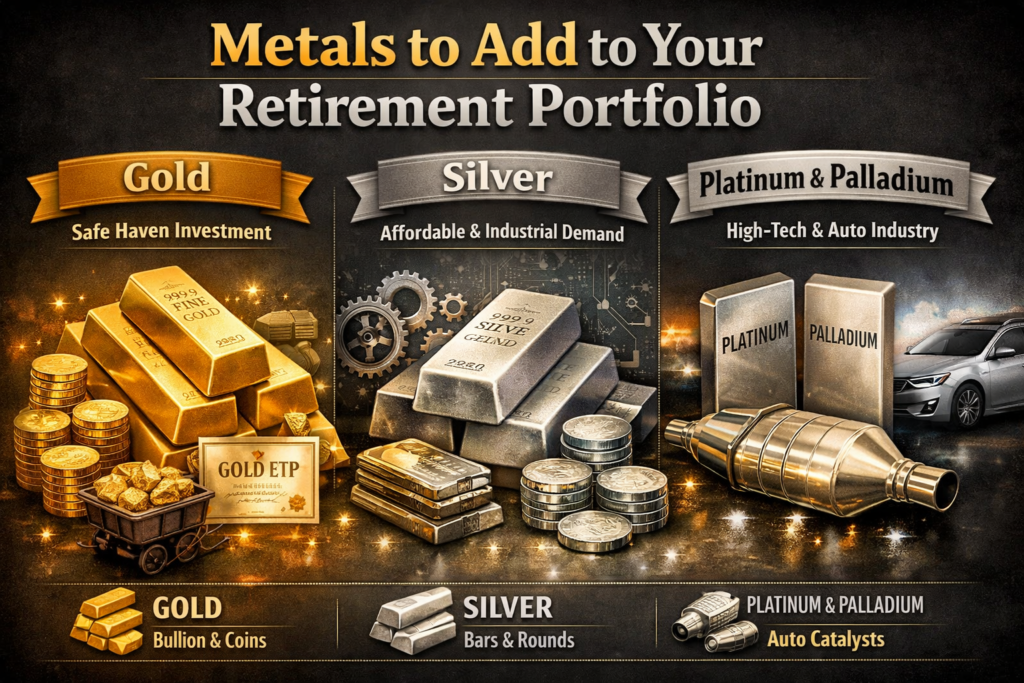
- Gold: The most well-known and trusted metal, it is often considered a safe investment against inflation and economic downturns. You can invest in gold in the form of bullion, gold coins, or even invest in gold ETFs and gold mining stocks.
- Silver: A cheaper alternative to gold, it is a safe investment option with properties similar to gold. It also has tremendous growth potential due to its industrial applications.
- Platinum and Palladium: These metals are less popular than gold and silver but have significant value due to their industrial applications in the automotive industry. Their demand can drive prices higher, making them a good addition to your retirement portfolio.
Each of these metals offers distinct benefits, allowing you to tailor your portfolio based on risk tolerance and investment goals.
How to Add Metals to Your Retirement Investment Plan
There are several ways you can incorporate metals into your retirement investment portfolio, depending on your investment goals. You can purchase physical metals such as gold or silver bullion, which will give you a physical asset that you can hold in a safe location, although this will also require extra attention on your part. Another option is to purchase metal ETFs or mutual funds, which will give you exposure to metals without having to handle them physically. Another option is to invest in a gold Roth IRA, which allows you to physically hold gold in a retirement account with potential tax benefits and helps secure your financial portfolio. You can also invest in mining stocks, which give you indirect exposure to precious metals and potentially high returns based on their performance.
Important Points to Consider When Investing in Metals for Your Retirement Portfolio
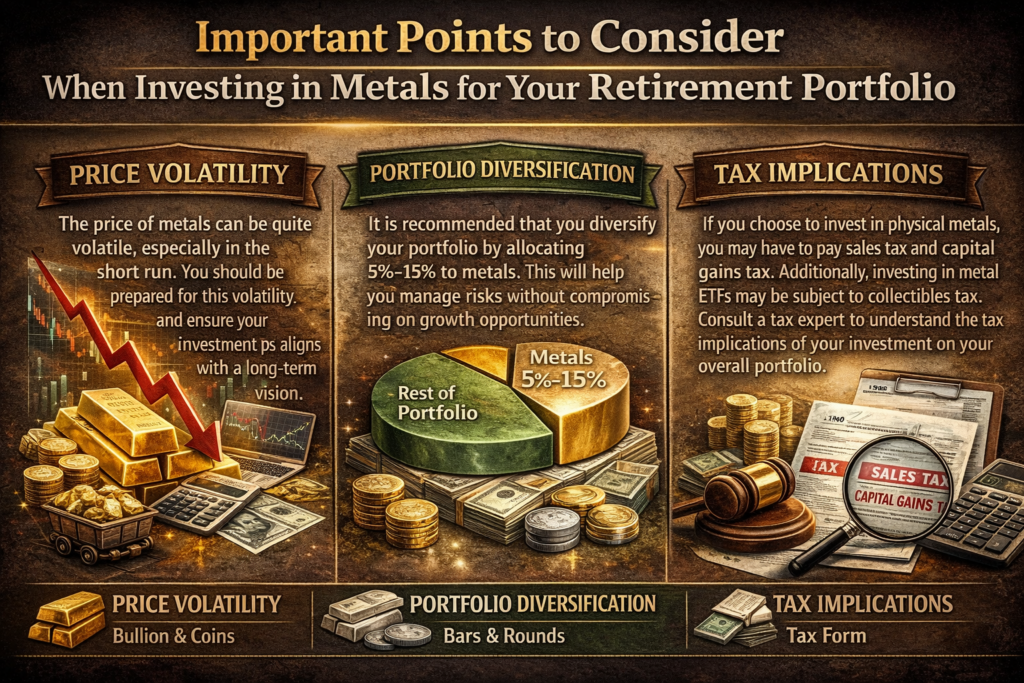
- Price Volatility: The price of metals can be quite volatile, especially in the short run. You should be prepared for this volatility and ensure your investment plan aligns with a long-term vision.
- Portfolio Diversification: It is recommended that you diversify your portfolio by allocating 5%-15% to metals. This will help you manage risks without compromising on growth opportunities.
- Tax Implications: If you choose to invest in physical metals, you may have to pay sales tax and capital gains tax. Additionally, investing in metal ETFs may be subject to collectibles tax. It is always a good idea to consult a tax expert to understand the implications of your investment on your overall portfolio.
How to Begin Investing in Metals for Retirement
Evaluate Your Risk Level and Retirement Plans
Prior to incorporating metals into your retirement investment portfolio, it is essential that you evaluate your retirement plans and risk level. Metals are a great way to diversify your retirement portfolio, but they also have different risks associated with them compared to stocks and bonds. By understanding your retirement plans, you can determine how much of your retirement portfolio should be invested in metals.
Select the Right Metal Investment Alternative
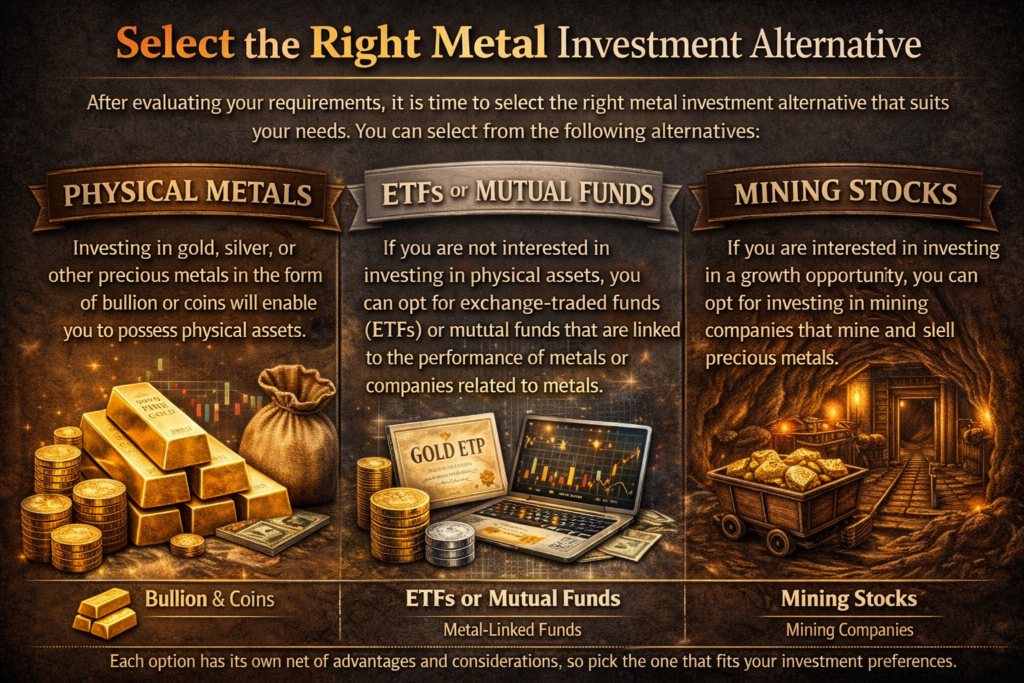
After evaluating your requirements, it is time to select the right metal investment alternative that suits your needs. You can select from the following alternatives:
- Physical metals: Investing in gold, silver, or other precious metals in the form of bullion or coins will enable you to possess physical assets.
- ETFs or Mutual Funds: If you are not interested in investing in physical assets, you can opt for exchange-traded funds (ETFs) or mutual funds that are linked to the performance of metals or companies related to metals.
- Mining stocks: If you are interested in investing in a growth opportunity, you can opt for investing in mining companies that mine and sell precious metals.
Each option has its own set of advantages and considerations, so pick the one that fits your investment preferences.
Consult with a Financial Advisor
However, if you are not sure how to incorporate metals into your investment portfolio or if you would like a personalized approach, you should speak with a financial advisor. A financial advisor can help you create a comprehensive investment plan that incorporates metals into your overall strategy. They can also help you ensure you use tax-advantaged investment vehicles, such as Individual Retirement Accounts, when investing in metals. For instance, they can walk you through the process of 401k to gold rollovers so that you can roll over your 401 (k) into a gold-backed IRA.
Conclusion
At Opulent Gold Group, we understand the importance of securing your retirement with dependable, tangible assets. Precious metals like gold, silver, and platinum provide a strategic hedge against inflation, economic uncertainty, and market fluctuations, making them a valuable addition to any retirement portfolio. By diversifying with metals, you can safeguard your wealth for the long term and ensure that your retirement goals are met with greater confidence. If you’re ready to take the next step in securing your financial future, Opulent Gold Group is here to help. Contact us today to learn more about how investing in precious metals can help you build a stronger, more diversified retirement portfolio.
FAQ
Why should I consider investing in precious metals for retirement?
Precious metals like gold and silver offer protection against inflation and economic uncertainty. They help diversify your portfolio, reduce risk, and preserve wealth over the long term.
What are the benefits of adding gold to my retirement portfolio?
Gold acts as a hedge against inflation and economic downturns. It maintains value over time and is less correlated with stock market performance, making it a reliable asset for diversification.
How much of my retirement portfolio should be allocated to precious metals?
Most experts recommend allocating 5% to 15% of your retirement portfolio to metals, depending on your risk tolerance and goals.