

🎧 Listen to the Summary
IRA-Eligible Gold Coins vs. Bars: Rules, Premiums & Liquidity
Gold Coins vs. Bars: Quick Comparison
- IRA eligibility: Determined by statutory coin exceptions or applicable bullion rules and custody requirements.
- Gold coins: Government-issued bullion may offer recognizable specifications and convenient individual units.
- Gold bars: Standard bullion bars can sometimes have lower premiums over their metal value.
- Liquidity: Product recognition, denomination, and current dealer buyback quotations matter.
- Best approach: Compare written purchase and resale quotations for products approved by the selected IRA custodian.
What Makes Gold Eligible for an IRA?
Gold IRA eligibility depends on more than the market value or appearance of a coin or bar. Federal tax law places restrictions on investments in collectibles, including many types of coins and precious metals.
Internal Revenue Code Section 408(m) provides exceptions for certain specifically identified coins and qualifying bullion. The IRS guidance on investments in collectibles and precious metals explains these exceptions and the potential tax consequences of acquiring ineligible collectibles.
Gold Purity Requirements
Gold bullion generally must meet the applicable minimum fineness standard of .995, or 99.5% pure gold, to qualify under the bullion exception.
Many modern gold bars and high-purity bullion coins contain .999 or .9999 fine gold, exceeding that threshold.
Nevertheless, meeting a purity standard does not automatically establish that every product is acceptable for a specific IRA transaction. The exact product and applicable custody requirements must also be verified.
Why American Gold Eagles Are an Exception
The American Gold Eagle contains approximately 91.67% gold, along with silver and copper. Its purity is lower than the general .995 bullion threshold.
However, qualifying American Gold Eagle coins are covered by a specific statutory exception under the applicable U.S. coinage provisions.
As a result, certain 22-karat American Gold Eagles may be held in an IRA even though ordinary bullion products generally must meet a higher purity standard.
The exception should not be extended automatically to other 22-karat gold coins.
Custodian and Storage Requirements
A Gold IRA is administered through an eligible trustee or custodian. Applicable rules concerning possession and custody must be followed when the account acquires physical precious metals.
Investors should not assume that storing IRA-owned bullion at home satisfies these requirements.
Before purchasing, the account holder should confirm the custodian’s acceptance of the specific product, the approved storage arrangement, and the procedures for delivery and recordkeeping.
For readers exploring the broader account process, our Gold IRA guide explains account administration, funding, fees, and related considerations.

Which Gold Coins Are IRA-Eligible?
Gold bullion coins are available from several government mints. Their official specifications, weight, and metal content can make them easier to identify and compare.
However, a coin’s government-issued status does not automatically make it IRA-eligible.
Some coins qualify through explicit statutory exceptions, while others may qualify under the applicable bullion requirements.
American Gold Eagle Coins
The American Gold Eagle is an official U.S. Mint bullion coin first issued in 1986. It is available in one-ounce, half-ounce, quarter-ounce, and one-tenth-ounce denominations.
The one-ounce version contains one full troy ounce of fine gold. Because the coin also contains silver and copper, its total weight is approximately 33.931 grams.
Its 22-karat composition improves durability compared with higher-purity gold, which is naturally softer.
The coin’s principal characteristics include government-guaranteed metal content, recognizable designs, and eligibility under a statutory coin exception.
American Gold Buffalo Coins
The American Gold Buffalo was introduced in 2006 as the first 24-karat gold bullion coin issued by the United States Mint.
The standard one-ounce Gold Buffalo contains one troy ounce of .9999 fine gold, meeting the commonly applicable bullion fineness requirement.
Its design is based on James Earle Fraser’s Buffalo Nickel artwork, featuring a Native American portrait and an American bison.
For investors comparing U.S. bullion coins, the Gold Buffalo offers high-purity gold, official mint specifications, and an established bullion format.
The United States Mint bullion coin specifications provide authoritative information about the purity, weight, and characteristics of both Gold Eagles and Gold Buffalos.
Other Gold Bullion Coins
Other high-purity bullion coins, including standard modern Canadian Gold Maple Leafs, may also satisfy the applicable bullion fineness requirement.
However, product specifications, special editions, finishes, and acceptance policies can differ. Investors should confirm the exact version with the IRA custodian rather than assuming every coin in a particular series will qualify.
Which Gold Bars Can Be Held in a Gold IRA?
Gold bars are another potential form of IRA-eligible physical gold. They are manufactured in numerous weights, from small gram-denominated pieces to larger investment bars.
Unlike qualifying American Gold Eagles, ordinary gold bars generally rely on the applicable bullion requirements rather than a specific coin exception.
Purity, Weight and Refiner Verification
A gold bar intended for IRA ownership should be evaluated using several criteria:
- Documented fineness meeting the applicable bullion requirement.
- Clearly identified metal content and weight.
- Reliable identification of the manufacturer or refiner.
- Relevant assay documentation or serial number, where applicable.
- Acceptance of the exact product by the IRA custodian.
- Appropriate arrangements for physical custody and storage.
Some bars include individual assay packaging and identifying markings that assist with authentication. The presence of these features can support product verification, but it does not replace the custodian’s eligibility determination.
One-Ounce Gold Bars vs. Larger Bars
One-ounce bars offer a standardized quantity of physical gold that can be compared with one-ounce bullion coins.
Larger bars may sometimes carry more favorable fabrication premiums per ounce, depending on market conditions and supplier pricing.
However, a larger single bar can be less flexible when an investor wants to sell only part of the total metal position.
Several smaller bars may provide greater partial-sale flexibility, although purchasing multiple units can increase the total premium compared with a single larger product.
Are Small Gold Bars Automatically IRA-Eligible?
No. A small bar should not be assumed eligible simply because its stamped purity is high.
The selected custodian may require specific documentation, approved manufacturers, or acceptable storage and transaction procedures.
This issue can be especially relevant to unusual bullion formats or divisible bars. A product suitable for direct personal ownership is not necessarily appropriate for every self-directed IRA arrangement.
IRA-Eligible Gold Coins vs. Bars: Main Differences
The following comparison highlights practical differences relevant to a Gold IRA purchase. Individual products may vary from these general characteristics.
| Comparison Factor | Gold Coins | Gold Bars |
|---|---|---|
| IRA eligibility | Certain statutory exceptions or qualifying bullion rules | Qualifying bullion rules and custody requirements |
| Purity | Depends on the coin; Gold Eagle .9167, Gold Buffalo .9999 | Often .999 or .9999, depending on the product |
| Premium | May reflect minting, denomination, recognition, and demand | Standard larger units may have lower fabrication premiums |
| Recognition | Popular government bullion coins have established specifications | Depends on the refiner, documentation, and product |
| Partial liquidation | Individual coins can be sold separately | Depends on individual bar sizes and number of bars |
| Custody | Applicable IRA trustee or custodian requirements | Applicable IRA trustee or custodian requirements |
Neither format guarantees greater liquidity, lower overall expenses, or superior investment performance. A meaningful comparison should rely on the specific products and the current written terms.
Gold Coin vs. Gold Bar Premiums: Understanding the Real Cost
One of the most common reasons investors compare gold coins and bars is the difference between the underlying gold value and the final retail price.
A purchase premium reflects the amount paid above the market value of the fine gold contained in a product.
Premiums may incorporate fabrication, minting, distribution, supplier costs, dealer margins, and changes in market demand.
How to Calculate a Gold Premium
The basic calculation is:
Gold Premium Formula
Premium (%) = [(Retail Price − Fine Gold Value) / Fine Gold Value] × 100
Fine gold value should be calculated using the actual gold content of the product, rather than its gross weight when alloy metals are present.
Consider the following hypothetical comparison involving a one-ounce gold coin and a one-ounce gold bar.
| Illustrative Example | Gold Coin | Gold Bar |
|---|---|---|
| Spot value of fine gold | $3,000 | $3,000 |
| Hypothetical retail price | $3,150 | $3,060 |
| Premium amount | $150 | $60 |
| Premium percentage | 5% | 2% |
These figures are hypothetical and are not current Opulent Gold Group prices, historical market averages, or promised premium levels.
In this example, the bar has a lower upfront premium. However, purchase premium alone does not establish which product would provide a better result when sold.
Why Dealer Spreads Matter
The retail price paid for a bullion product may differ from the amount a dealer offers to repurchase that product.
The difference between buying and selling quotations is commonly described as a dealer spread.
The CFTC’s advisory on purchasing physical precious metals recommends obtaining written details about the retail price, buyback quotation, fees, and commissions before making a purchase.
A product with a smaller purchase premium may not always have the most favorable eventual resale terms.
Investors should request comparable purchase and repurchase quotations for the exact coin and bar being evaluated.
Account Expenses Are Separate From Metal Premiums
Physical precious metals held in an IRA can also involve expenses related to account establishment, administration, custody, storage, insurance, and transactions.
These charges should be reviewed separately from the price of the metal itself.
For company-specific disclosures and questions about applicable charges, review the Opulent Gold Group fees and pricing information. The current written arrangements determine the charges applicable to a particular account.

Liquidity and Resale: Are Gold Coins Easier to Sell Than Bars?
Liquidity describes how readily an asset can be sold under acceptable market conditions.
Gold coins and bars can both have active resale markets, but the ease and economics of selling depend on the product, quantity, documentation, dealer demand, and current quotation.
Product Recognition
Government-issued bullion coins such as American Gold Eagles and American Gold Buffalos have standardized mint specifications and widely recognized designs.
Gold bars from established refiners may also be readily identified, particularly when weight, purity, manufacturer markings, and supporting documentation are available.
However, broad recognition does not guarantee that every dealer will offer the same price or purchase a particular product.
Partial Liquidation
The number and size of individual holdings can affect the flexibility of future sales.
For example, an investor holding several one-ounce gold coins may be able to instruct the custodian to sell selected coins while retaining the others.
An investor holding a single larger bar may have less flexibility to sell only a small portion of that physical unit.
However, a portfolio of several smaller bars can offer similar unit-by-unit selling flexibility to a collection of individual coins.
The important distinction is therefore often denomination and unit size, rather than coins versus bars alone.
Liquidity Consideration for Gold IRA Investors
Before purchasing a larger unit, consider whether future partial sales might be necessary. Compare the costs of holding several smaller eligible units against the costs of acquiring and eventually selling one larger unit.
IRA Sales vs. Personal Delivery
Selling bullion while it remains within an IRA is different from taking a personal distribution of physical precious metals or withdrawing cash.
Distributions may involve additional tax rules, reporting obligations, processing requirements, and delivery costs.
Investors should discuss those distinctions with their IRA custodian and appropriately qualified tax professionals.
Compare Two American Gold Coins Listed by Opulent Gold Group
While this article compares eligible gold coins with bars, two bullion coins in the Opulent Gold Group catalog provide a useful real-world illustration of how gold purity and IRA eligibility can differ.
Both products are issued by the United States Mint and contain one troy ounce of fine gold. Their compositions, however, are not identical.
These examples are educational product references. Current availability, pricing, specific product variations, and custodian acceptance must be verified before purchase.
Explore U.S. Gold Bullion Coins
Two products listed in the Opulent Gold Group catalog
22-KARAT U.S. GOLD BULLION
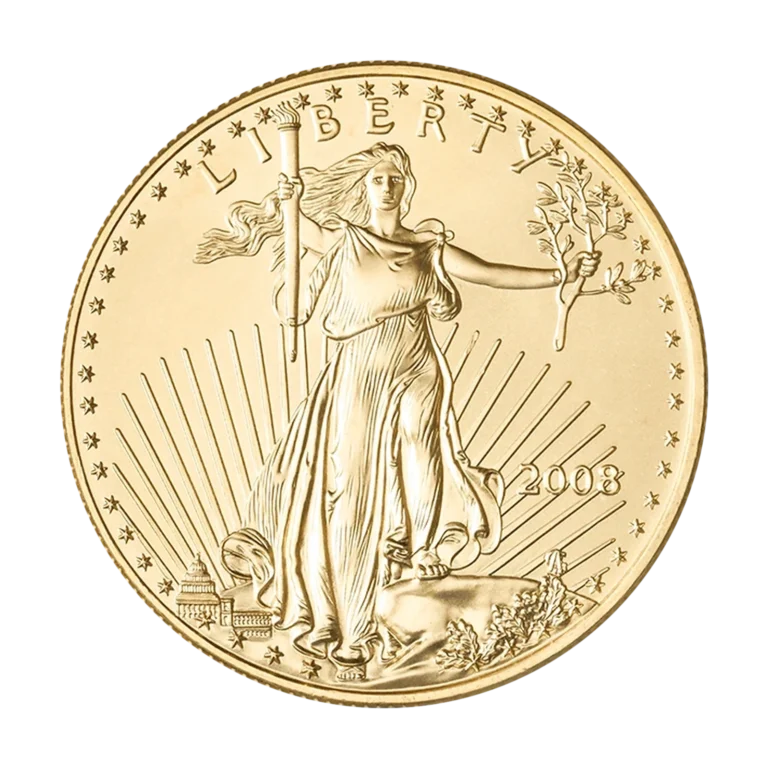
American Gold Eagle 1 oz
Fine gold content: 1 troy ounce
Purity: 91.67% gold (.9167)
Gross weight: Approximately 33.931 g
Mint: United States Mint
IRA consideration: Specifically covered by the applicable statutory coin exception, subject to account requirements.
Image note: The supplied illustrative photograph is labeled as a 1/10-oz Gold Eagle. The linked product is the 1-oz version. Confirm the correct denomination photograph before publication.
24-KARAT U.S. GOLD BULLION
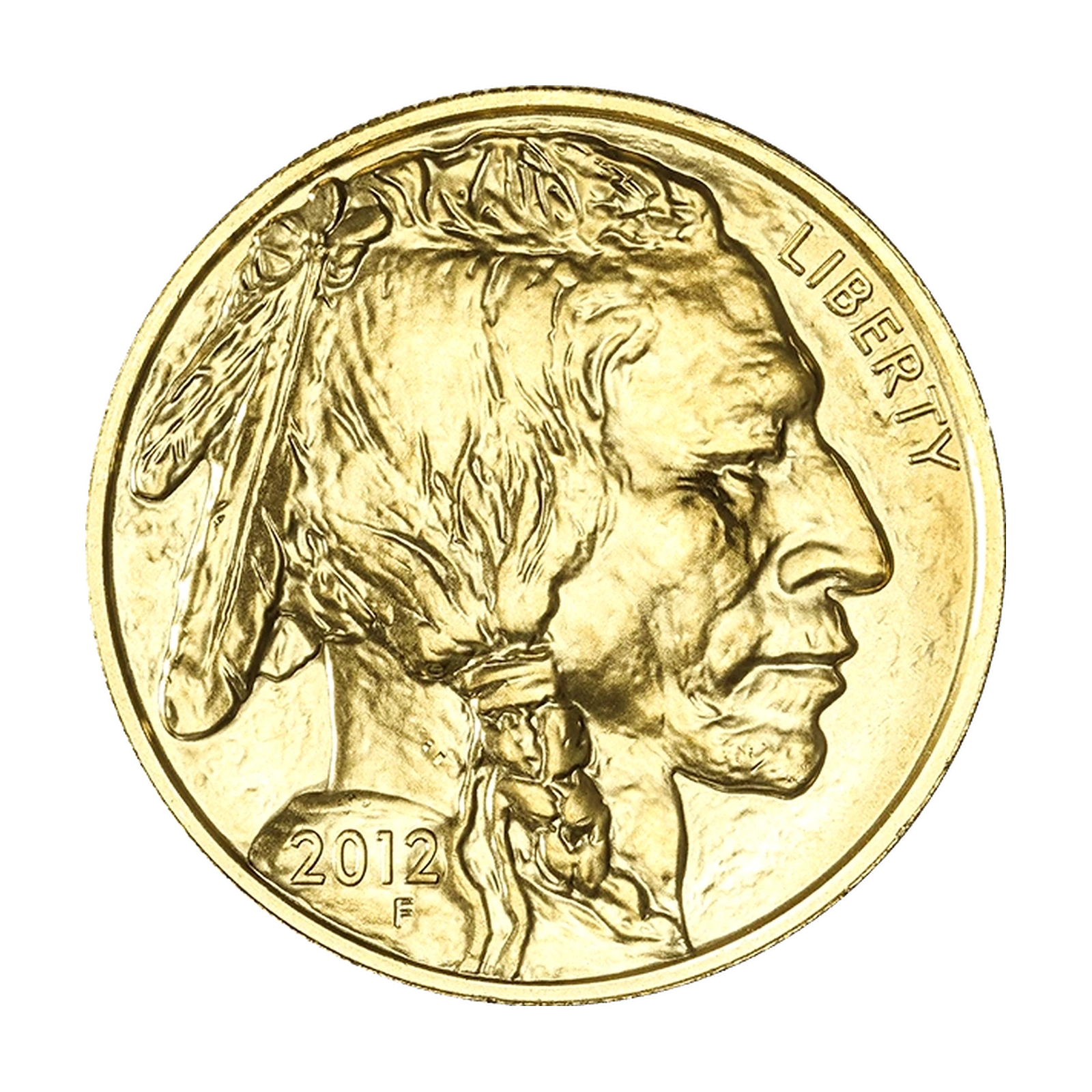
American Gold Buffalo 1 oz
Fine gold content: 1 troy ounce
Purity: 99.99% gold (.9999)
Gross weight: Approximately 31.1 g
Mint: United States Mint
IRA consideration: Meets the commonly applicable gold bullion fineness requirement, subject to custodian acceptance and custody rules.
Photo illustrates a Gold Buffalo coin. Product year, specific issue, price and availability should be confirmed before ordering.
Product listings do not constitute live inventory or pricing confirmations. Contact the company and the selected IRA custodian to confirm applicable terms.
American Gold Eagle vs. Gold Buffalo: Which Should You Consider?
The Gold Eagle and Gold Buffalo illustrate two different approaches to coin composition.
The Gold Eagle contains one ounce of fine gold within a durable 22-karat alloy and qualifies under a specific coin exception. The Gold Buffalo contains one ounce of .9999 fine gold and meets the usual bullion purity threshold.
Neither purity level alone determines which coin will be more economical to purchase or sell.
Actual purchase premiums, dealer demand, available inventory, and future repurchase prices can vary.
For a broader selection of metal formats, investors can browse the Opulent Gold Group precious metals catalog.
Which Gold Products May Not Qualify for a Gold IRA?
Not all forms of physical gold qualify for retirement-account ownership.
Products requiring special care include collectible or numismatic coins, items that do not meet applicable purity standards, and gold products lacking adequate documentation.
Collectible and Numismatic Coins
Many historical gold coins are valued for rarity, preservation, grading, or collector interest in addition to their gold content.
For example, pre-1933 U.S. gold coins may command collectible premiums but should not automatically be treated as eligible Gold IRA bullion.
Investors should distinguish modern statutory coin exceptions from the market for rare or historical numismatic products.
Products That Do Not Meet Purity Requirements
A gold product that falls below the applicable bullion fineness requirement generally will not qualify under the ordinary bullion exception unless a separate statutory exception applies.
Government issuance, branding, or a high retail price does not replace the eligibility rules.
Unusual Formats and Unverified Documentation
Some specialized bullion formats require additional review before they can be accepted by a custodian.
Investors should obtain written confirmation before purchasing products whose weight, packaging, refiner, or intended storage method differs from standard IRA bullion arrangements.
How to Choose Between IRA-Eligible Gold Coins and Bars
The best choice depends on the investor’s objectives, the specific products available, and the terms offered by the account’s service providers.
1. Confirm IRA Eligibility First
Identify the exact coin or bar before proceeding. Ask the selected custodian whether the product is acceptable and how it must be held.
Do not rely solely on labels such as “IRA approved” or “investment grade” without reviewing the underlying specifications.
2. Compare Equivalent Fine Gold Content
When comparing retail prices, use the actual amount of fine gold rather than gross weight or face value.
For example, a one-ounce American Gold Eagle and a one-ounce American Gold Buffalo both contain one troy ounce of fine gold, despite having different total weights.
3. Request the Purchase Premium
Ask for the retail quotation and the corresponding metal value at the time of the quote.
This allows investors to evaluate whether any price difference reflects the product’s denomination, fabrication, demand, or other factors.
4. Compare Repurchase Terms
Request information about how the dealer would value the exact product in a future sale.
Buyback policies should be assessed separately from retail purchase pricing, since the absence of a separate liquidation service fee does not necessarily eliminate the bid-ask spread.
5. Consider Partial-Sale Flexibility
Consider whether the holdings are likely to be sold in several transactions or as a single position.
Several smaller eligible units may provide more flexibility than one large unit, but the combined acquisition premiums may differ.
6. Review Custody and Ongoing Expenses
Check the account’s administration, custody, insured storage, and transaction costs.
These expenses can affect the economics of holding physical bullion regardless of whether the account contains coins or bars.
7. Obtain Written Confirmation Before Funding
Request written details about the selected product, purchase price, custodian approval, applicable charges, and delivery arrangements.
A clear quotation helps investors compare options and avoid relying on incomplete promotional descriptions.
If your interest extends to direct physical gold purchases outside an IRA, our separate guide to buying gold bars and coins safely addresses broader purchasing and ownership considerations.
Frequently Asked Questions About IRA-Eligible Gold Coins vs. Bars
Are gold coins or bars better for an IRA?
Neither format is automatically better. Coins may offer standardized government-issued products and individual selling units, while some bars may have lower fabrication premiums. Compare eligibility, actual quotations, liquidity, and ownership costs.
What gold purity is required for a Gold IRA?
The commonly applicable bullion fineness requirement is .995, or 99.5% pure gold. Specific statutory exceptions exist for certain coins, including qualifying American Gold Eagles.
Why are American Gold Eagle coins eligible despite being 22-karat?
Qualifying American Gold Eagles fall under a statutory coin exception. Their IRA eligibility is not based solely on satisfying the ordinary .995 bullion threshold.
Is the American Gold Buffalo suitable for a Gold IRA?
The standard one-ounce American Gold Buffalo contains .9999 fine gold and meets the commonly applicable bullion purity requirement. Its specific acceptance and custody arrangement should still be confirmed with the IRA custodian.
Do gold bars always have lower premiums than coins?
No. Standard bars may sometimes carry lower premiums than popular bullion coins, but actual prices depend on the specific product, size, availability, supplier, and market conditions.
Can I sell individual gold coins from my IRA?
An IRA custodian may arrange a sale of individual eligible coins, subject to account procedures and transaction terms. Selling within the account is different from taking a personal distribution.
Final Verdict: Gold IRA Coins vs. Bars
Both qualifying gold coins and bars can provide exposure to physical gold within a properly administered retirement account.
Gold coins may offer standardized government-mint specifications and convenient individual units. Gold bars may provide competitive purchase premiums, particularly in larger sizes, although their advantages depend on the exact product and current market conditions.
The American Gold Eagle and American Gold Buffalo demonstrate why gold purity must be considered alongside the legal eligibility rules. One qualifies through a specific statutory coin exception, while the other meets the usual bullion fineness standard.
Investors should begin with product eligibility, compare equivalent fine-gold content, and evaluate both purchase and resale terms. Custodian approval, storage arrangements, and ongoing expenses should be confirmed before committing funds.
Ultimately, the appropriate choice depends on the investor’s objectives and the full financial terms of the proposed transaction—not simply whether the metal is shaped into a coin or a bar.
Explore Gold IRA Options With Opulent Gold Group
Compare eligible precious metals products, understand current pricing, and ask about custodian requirements, storage arrangements, and potential transaction costs before making a decision.
Product eligibility, pricing, availability, and applicable fees must be confirmed for each transaction.
Editorial Note: Content reviewed November 2026. Information is based on IRS guidance, official United States Mint specifications, CFTC investor education materials, and publicly available Opulent Gold Group product descriptions. Product availability and acceptance requirements may change.
Financial and Tax Disclaimer: This article is for general educational and informational purposes only and does not constitute personalized financial, investment, tax, or legal advice. Precious metals involve price fluctuations, transaction expenses, and the possibility of financial loss. A dealer’s product listing does not establish eligibility for a particular IRA. Investors should review current written agreements and consult appropriately qualified professionals before making retirement-account decisions.