
When inflation rises and economic uncertainty takes hold, protecting your wealth becomes a top priority. Traditional investments, such as stocks and bonds, often struggle to keep pace with inflation, leading many to seek alternative assets that can safeguard their financial future. One investment that has consistently stood the test of time is gold. Known for its ability to retain value during periods of economic instability, gold has long been a trusted hedge against inflation.
At Opulent Gold Group, we specialize in helping individuals secure their wealth through strategic gold investments. Whether you’re looking to diversify your portfolio or simply protect your assets during uncertain times, gold provides a reliable solution. But how exactly does gold perform in the face of inflation, and why has it remained one of the most sought-after investments throughout history? In this blog, we’ll explore the powerful role that gold plays in inflation protection and how you can make it work for you.
The Link Between Inflation and Economic Uncertainty
Inflation doesn’t happen in a vacuum. It’s often a symptom of broader economic uncertainty—periods marked by financial instability, policy changes, or global disruptions. At its core, inflation refers to the gradual rise in prices over time, which reduces the purchasing power of money. In simple terms, the same amount of cash buys less than it used to, and that erosion can quietly undermine savings and long-term investments.
Economic uncertainty is one of the main drivers of inflation. Events such as recessions, geopolitical tensions, supply chain disruptions, or large-scale government stimulus programs can all increase the amount of money circulating in the economy. When more money is chasing fewer goods and services, prices rise. While moderate inflation is considered normal, prolonged or high inflation can create serious challenges for investors and everyday consumers alike.
How Inflation Impacts Traditional Investments
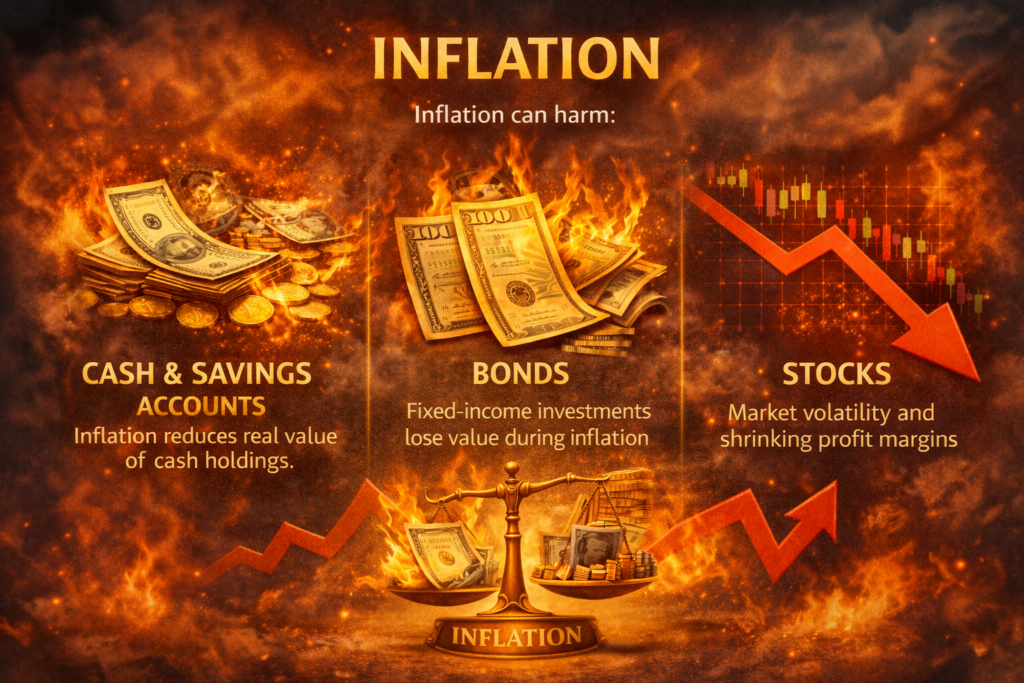
Inflation can significantly affect traditional investment vehicles, often in ways investors don’t expect:
- Cash and Savings Accounts: Inflation steadily reduces the real value of cash holdings, especially when interest rates on savings accounts fail to keep up with rising prices.
- Bonds: Fixed-income investments can lose value during inflationary periods, as future interest payments are worth less in real terms.
- Stocks: While some companies can pass higher costs on to consumers, market volatility and shrinking profit margins often lead to unpredictable stock performance during uncertain times.
As inflation persists, many investors begin to reassess their strategies and look for assets that are less dependent on fiat currency value or monetary policy. This is where alternative assets—particularly gold—start to play a more prominent role. Historically, gold has maintained its purchasing power even when currencies weaken, making it an attractive option when economic conditions are unstable and inflationary pressures rise.
Understanding this connection between inflation and uncertainty is the first step toward building a more resilient investment strategy—one that can better withstand the ups and downs of an unpredictable global economy.
Why Gold is Seen as a Hedge Against Inflation
Gold has long been considered a reliable hedge against inflation, and for good reason. Unlike paper currencies, which can be printed in unlimited amounts by governments, gold is a finite resource. This scarcity, combined with its intrinsic value, makes gold uniquely positioned to retain purchasing power even as inflation erodes the value of traditional currencies. Let’s explore why gold has stood the test of time as one of the best ways to protect wealth during inflationary periods.
Gold’s Historical Performance
Gold’s ability to maintain value during inflationary times is backed by history. Over the centuries, gold has proven to be a constant store of value—an asset that transcends currency fluctuations and economic cycles.
- The 1970s Stagflation: During the 1970s, the U.S. experienced a period of stagflation, marked by high inflation and slow economic growth. While stocks and bonds struggled, gold prices surged. From 1971 to 1980, the price of gold increased by over 500%, highlighting its role as a protector of wealth during times of economic instability.
- The 2008 Financial Crisis: During the global financial crisis of 2008, gold once again proved its worth as a safe-haven asset. As stock markets plummeted and fiat currencies faltered, gold prices rose by over 25% between 2007 and 2009, as investors flocked to it for security.
These examples show that gold not only preserves its value during inflation but often outperforms other asset classes when inflationary pressures are at their peak.
The Intrinsic Value of Gold
Gold holds intrinsic value, meaning its worth isn’t tied to the decisions of governments or financial institutions. This is in stark contrast to fiat currencies, which are subject to inflation due to central banks’ ability to print money. Gold’s intrinsic value stems from its limited supply and widespread demand—whether for use in jewelry, electronics, or, most importantly, as a store of wealth. Unlike paper money, which can be devalued or debased by economic policies, gold’s value remains largely unaffected by inflationary pressures.
In addition, gold is tangible, unlike digital currencies or financial products that can be wiped out in the event of a crisis. It is a physical asset that investors can hold in their possession, providing a level of security that is not available with other types of investments.
Gold vs. Other Inflation-Hedging Assets
While there are other options available to protect against inflation, gold has distinct advantages that set it apart:
- Real Estate: Real estate has historically been a good hedge against inflation. However, it comes with its own set of risks, such as high entry costs, illiquidity, and vulnerability to market crashes. Gold, on the other hand, is highly liquid and can be bought or sold easily without the need for a large upfront investment.
- Commodities: Other commodities like oil and agricultural products can also serve as inflation hedges. However, their prices are often more volatile than gold, subject to supply and demand fluctuations and geopolitical factors. Gold’s price movements are generally more predictable and stable, making it a safer long-term investment during uncertain times.
- Cryptocurrencies: Digital currencies like Bitcoin are often touted as an inflation hedge, but their volatility and lack of historical precedent make them riskier. Gold, with its centuries of stability, remains a more trusted asset for long-term wealth protection.
Overall, gold’s ability to maintain its value in the face of inflation, combined with its tangible nature and historical track record, makes it one of the most reliable assets to protect wealth during periods of economic uncertainty. Whether you’re looking to hedge against inflation or simply add a stable asset to your portfolio, gold remains a proven choice for investors seeking long-term security.
The Performance of Gold During Recent Inflationary Periods
Gold’s role as a hedge against inflation has been consistently proven throughout history, but its performance during more recent inflationary periods further underscores its value in times of economic uncertainty. Let’s take a closer look at how gold has fared during some of the most significant financial crises of the 21st century.
Gold’s Performance During the COVID-19 Pandemic
The COVID-19 pandemic triggered an unprecedented global economic shutdown in 2020, sparking a wave of uncertainty. Governments around the world issued stimulus packages, central banks slashed interest rates, and the global supply chain was disrupted. As economies contracted and inflationary pressures began to build, gold once again showed its resilience.
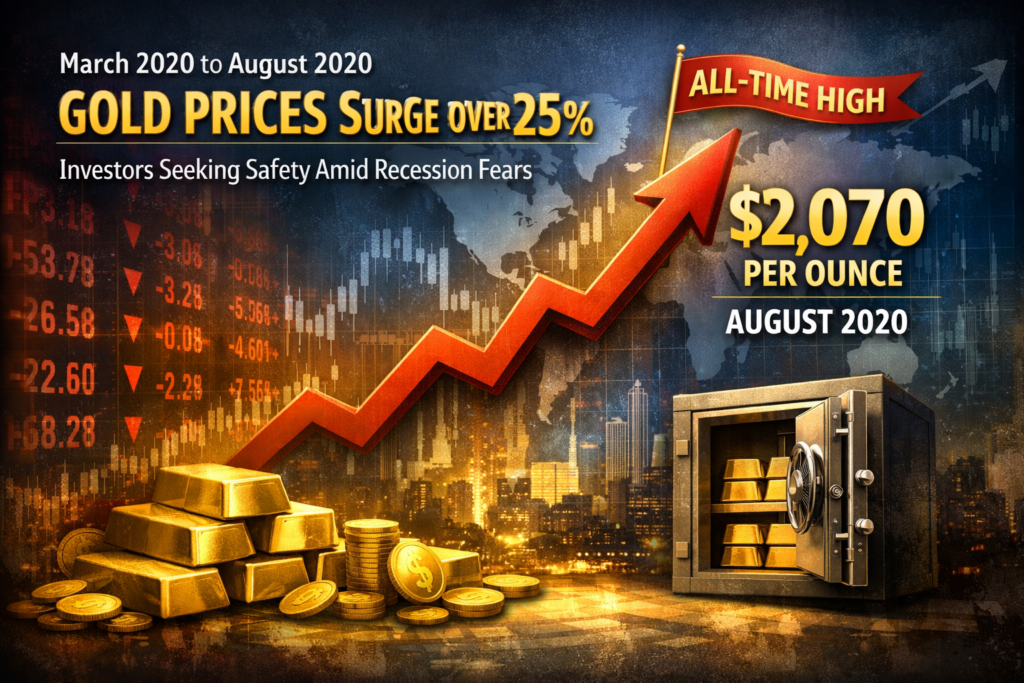
Between March 2020 and August 2020, as fears of a global recession intensified, gold prices soared by over 25%. This surge was largely driven by investors seeking safety in tangible assets amidst the uncertainty. Gold reached an all-time high of nearly $2,070 per ounce in August 2020, a clear indication of its status as a go-to safe-haven asset in times of crisis.
During this period, many individuals looked to diversify their portfolios by converting their 401k to gold. The option to convert a 401k to gold has gained popularity as a way to protect retirement savings during uncertain economic times.
Even as financial markets began to recover, gold retained its value, while other asset classes like stocks fluctuated wildly. This performance highlights gold’s ability to not only weather inflation but also provide growth opportunities during uncertain times.
Gold During the 2008 Financial Crisis
The 2008 financial crisis marked one of the most severe economic downturns since the Great Depression, with banks failing, stock markets plummeting, and global trade grinding to a halt. During this period of intense financial stress, many investors fled to gold as a safe-haven investment.
Between 2007 and 2009, as the crisis unfolded, gold prices surged by more than 25%. While the stock market lost nearly 40% of its value, gold stood firm, continuing to offer investors a stable store of value. Gold’s performance during this crisis proved that, unlike stocks or bonds, it could offer a cushion against the volatility of financial markets.
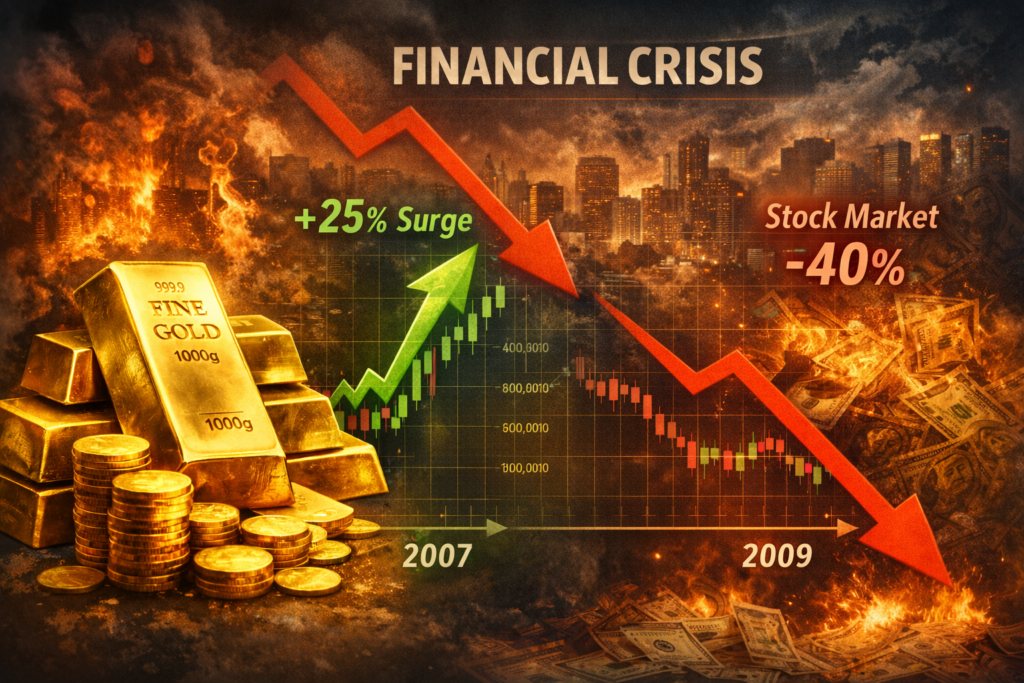
Gold’s ability to retain its value during such a tumultuous time further solidified its reputation as a reliable hedge against economic instability. This period serves as a strong example of why gold is often seen as the ultimate insurance policy against financial crises and inflationary pressures.
Gold’s Role in the 2022 Inflation Surge
In 2022, the world once again faced rising inflationary pressures, with many countries seeing the highest inflation rates in decades. Factors such as the war in Ukraine, supply chain disruptions, and continued monetary stimulus contributed to a sharp increase in the cost of living.
During this period, gold performed as expected: it rose in value. While the stock market struggled with volatility and inflationary concerns, gold prices continued to climb, reaching new highs. As investors sought to protect their wealth, gold remained a steady performer, continuing to offer a safe haven during times of inflation and geopolitical instability.
Visualizing Gold’s Performance:
To help put things into perspective, here’s a look at how gold prices responded during these major inflationary periods:
- 2008 Financial Crisis: Gold rose by over 25% as the financial system teetered.
- COVID-19 Pandemic: Gold reached an all-time high, increasing by 25% within a matter of months.
- 2022 Inflation Surge: Gold prices climbed steadily as inflation reached its highest levels in decades.
Gold’s consistent performance during these challenging periods further proves its unparalleled ability to act as an inflation hedge. Whether you’re investing in physical gold, gold ETFs, or other gold-related assets, its resilience in the face of economic uncertainty is undeniable.
How to Invest in Gold for Inflation Protection
Investing in gold is one of the smartest ways to protect your wealth during inflationary periods, but how you choose to invest in gold can make a significant difference. Fortunately, there are various ways to gain exposure to gold, each with its own set of benefits and considerations. Gold IRA and Gold Roth IRA: These are popular options for retirement savings. A Gold IRA allows you to hold gold in your retirement account, while a Gold Roth IRA offers the added advantage of tax-free growth and withdrawals.
Gold Bullion and Coins: Physical Gold Investment
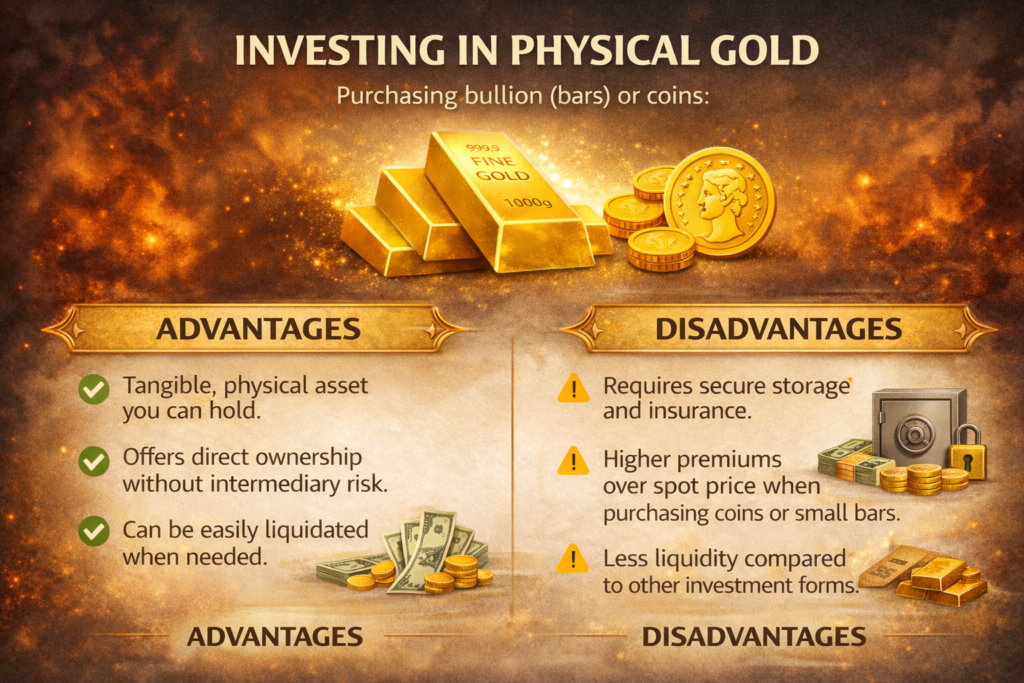
One of the most traditional and straightforward ways to invest in gold is by purchasing physical gold in the form of bullion (bars) or coins. This type of investment offers the advantage of owning a tangible asset, which can be held and stored outside of the financial system. Physical gold has long been viewed as a store of value that doesn’t rely on the performance of any financial markets or government policies.
- Advantages:
- Tangible, physical asset you can hold.
- Offers direct ownership without intermediary risk.
- Can be easily liquidated when needed.
- Disadvantages:
- Requires secure storage and insurance.
- Higher premiums over spot price when purchasing coins or small bars.
- Less liquidity compared to other investment forms, as selling may require time or effort to find a buyer at favorable prices.
Gold ETFs (Exchange-Traded Funds)
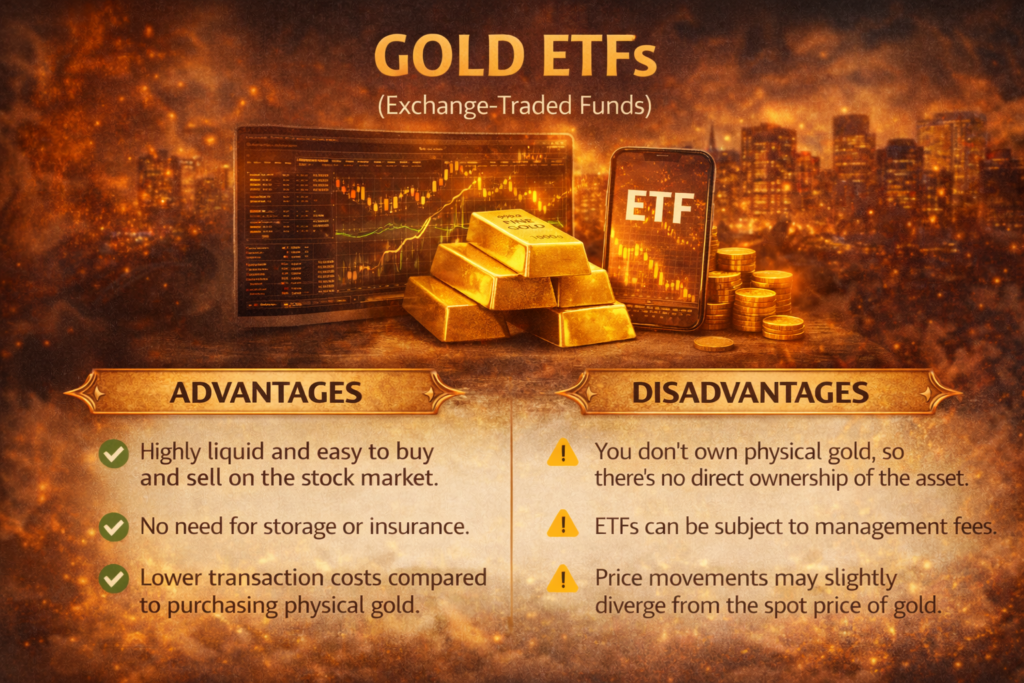
For investors who prefer a more liquid and easily tradable form of gold, Gold ETFs (Exchange-Traded Funds) are an excellent option. These funds allow you to invest in gold without the need to physically buy, store, or insure it. Gold ETFs track the price of gold and are bought and sold just like stocks on the exchange.
- Advantages:
- Highly liquid and easy to buy and sell on the stock market.
- No need for storage or insurance.
- Lower transaction costs compared to purchasing physical gold.
- Disadvantages:
- You don’t own physical gold, so there’s no direct ownership of the asset.
- ETFs can be subject to management fees.
- Price movements may slightly diverge from the spot price of gold.
Gold Mining Stocks and Funds
Another indirect way to invest in gold is by purchasing stocks in gold mining companies or investing in gold mining ETFs. These stocks generally perform well when the price of gold is rising, as higher gold prices increase the profitability of mining operations. Additionally, these investments provide exposure to the gold market without requiring direct ownership of the metal.
- Advantages:
- Potential for higher returns if gold prices increase and mining operations thrive.
- You can diversify your portfolio by adding mining companies to your holdings.
- Dividend-paying stocks can provide income in addition to capital appreciation.
- Disadvantages:
- Exposure to mining industry risks, such as operational challenges, geopolitical factors, and company-specific issues.
- Less stable than direct investment in physical gold due to market volatility in the mining sector.
Gold Certificates and Digital Gold
In addition to physical gold and ETFs, there are modern options for investors interested in gold investment. Gold certificates represent ownership of physical gold held by a bank or institution, while digital gold allows you to invest in gold electronically without having to store or handle the metal itself.
- Advantages:
- Easier to trade than physical gold.
- No need to worry about storage or security.
- Disadvantages:
- Some risk that the issuing institution may default on its commitment to back the gold.
- Not as tangible as physical gold.
If you prefer a more streamlined and digital approach to owning gold, these options can provide flexibility and convenience, although they may not offer the same level of security as owning physical gold.
Risks and Considerations of Gold Investment
While gold is widely regarded as a safe-haven asset and a reliable hedge against inflation, like any investment, it comes with its own set of risks and considerations. Understanding these potential challenges is essential for investors who want to make informed decisions about including gold in their portfolios. Let’s take a closer look at some of the key risks and considerations when investing in gold.
Gold should ideally complement other investments such as stocks, bonds, real estate, and commodities. If you have an existing IRA and wish to increase your portfolio’s protection against inflation, you may want to convert IRA to gold.
Market Volatility and Gold
One of the most important factors to remember when investing in gold is that, although it’s seen as a stable asset during inflationary periods, it’s still subject to market volatility in the short term. Gold prices can fluctuate based on factors such as:
- Global economic events: Geopolitical tensions, changes in interest rates, or shifts in central bank policies can lead to sudden price movements in gold.
- Demand and supply dynamics: Gold prices are influenced by changes in mining production and demand from various sectors like technology and jewelry.
- Market sentiment: Gold prices are also driven by investor sentiment, and fear-driven buying or selling can lead to rapid price changes.
While gold has a proven track record of long-term growth, its price can still experience significant fluctuations in the short run. For investors looking to capitalize on gold as a long-term hedge against inflation, it’s important to focus on the metal’s enduring value rather than reacting to daily price movements.
Storage and Security Concerns
If you choose to invest in physical gold, such as gold bars or coins, one of the key considerations is how to safely store and secure your investment. Unlike stocks or bonds, physical gold requires careful handling to protect it from theft, damage, or loss.
- Storage Options: You’ll need to decide whether to store your gold at home, in a safe deposit box at a bank, or through a third-party storage facility. Each option has its pros and cons in terms of cost, convenience, and security.
- Insurance: It’s essential to insure your physical gold investment to protect against theft or loss. This adds an additional layer of cost but provides peace of mind.
- Access and Liquidity: While physical gold is highly liquid, it may take time to find a buyer or receive full market value if you need to sell quickly. The selling process can be more cumbersome compared to selling digital assets like ETFs.
Tips: Best Practices for Storing Gold
Diversification and Risk Mitigation
Gold can be an excellent asset to include in a diversified investment portfolio, but it shouldn’t be your only investment. While it can act as a hedge against inflation and market downturns, it’s important to remember that no single asset is without risk. Gold can experience periods of price stagnation or declines, particularly if inflation or economic uncertainty subsides.
- Diversifying across asset classes: To minimize risk and maximize potential returns, it’s crucial to diversify your portfolio. Gold should ideally complement other investments such as stocks, bonds, real estate, and commodities. A well-rounded portfolio can provide both stability and growth opportunities across various market conditions.
- Gold’s limited income generation: Unlike dividend-paying stocks or bonds, gold does not generate income. While it may appreciate in value, you won’t earn interest or dividends on gold holdings. For this reason, gold should be viewed more as a store of value than a source of regular income.
By incorporating gold into a diversified portfolio, you can mitigate risks while benefiting from the stability that gold brings during times of economic uncertainty.
Gold Investment Fees and Premiums
When investing in physical gold, investors often encounter additional costs such as premiums over the spot price of gold and transaction fees. These costs can vary depending on the form of gold purchased (bullion, coins, or bars) and the dealer you work with.
- Premiums: Gold coins and small bars typically come with higher premiums than larger bars, which can affect your overall investment return.
- Transaction Fees: Buying and selling physical gold often involves commissions or fees. These should be taken into account when calculating your potential return on investment.
When choosing how to invest in gold, it’s important to understand the costs involved and factor them into your decision-making process.
Securing Your Wealth with Gold in Uncertain Times
As inflation continues to rise and economic uncertainty looms, the importance of securing your wealth with a stable, long-term investment cannot be overstated. Throughout history, gold has proven to be one of the most reliable assets for protecting wealth during inflationary periods and times of financial instability. Whether it’s the historical performance of gold during the 1970s stagflation, the 2008 financial crisis, or the COVID-19 pandemic, gold has consistently shown its ability to maintain its value when other investments falter.
At Opulent Gold Group, we understand the crucial role that gold plays in safeguarding your financial future. With a wide range of gold investment options—from physical bullion and coins to gold-backed financial products like ETFs and mining stocks—we offer the expertise and resources you need to make informed decisions about how to integrate gold into your portfolio.
By choosing gold as part of your investment strategy, you’re not just adding a tangible asset to your portfolio; you’re securing a hedge against inflation, economic volatility, and market uncertainty. Gold’s enduring value, coupled with its liquidity and ability to withstand the test of time, makes it an essential asset for anyone looking to build wealth in uncertain times.
If you’re ready to explore how gold can protect and grow your wealth, Opulent Gold Group is here to help. Our team of experts is available to guide you through the gold investment process, offering personalized advice to ensure you choose the right options for your financial goals. Visit our website or contact us today to get started with your gold investment journey and secure your wealth for the future.
FAQ
What is the best way to invest in gold for inflation protection?
The best approach depends on your preferences. Physical gold (bullion or coins) offers direct ownership, while gold ETFs and mining stocks provide liquidity and easier trading. A mix of both can offer balanced protection.
Does gold always perform well during inflation?
Gold has historically been a strong hedge against inflation, but short-term fluctuations can occur. Over the long term, it tends to maintain or increase in value during inflationary periods.
Is gold a good investment during a recession?
Yes, gold is considered a safe-haven asset during recessions. It often retains or increases in value as investors seek stability amidst economic uncertainty.
What are the benefits of buying physical gold over ETFs?
Physical gold offers direct ownership and tangible value, while ETFs are easier to trade but lack the security and control of owning the metal directly.