
🎧 Listen to the summary
Table of Contents
- Introduction to Silver IRAs: Understanding the Basics
- Eligible Silver Bars and Coins for IRA Investment
- Costs and Fees Associated with Silver IRAs
- Comparative Analysis: When Silver Beats Gold in Investment
- Conclusion: Making Informed Decisions in Silver IRA Investments
- Frequently Asked Questions
Introduction to Silver IRAs: Understanding the Basics
A silver IRA is a self-directed individual retirement account holding IRS-approved physical silver rather than paper assets. Investors use this vehicle to hedge portfolios against inflation and equity volatility. Because IRS regulations differ significantly from standard brokerage rules, begin with an overview from Opulent Gold and review the precious-metals IRA guide before evaluating providers.
How the Structure Works
An IRS-approved custodian manages compliance and executes purchases, transferring silver to an authorized depository. Investors fund accounts through direct trustee-to-trustee rollovers or contributions, purchasing bullion meeting the minimum .999 fineness standard. For instance, an investor transferring $20,000 might purchase 100-ounce bars and sovereign coins. Because annual custodial maintenance, storage fees, and dealer buy-sell spreads impact net returns, always secure written fee schedules beforehand.
Practical Starting Points
Before opening an account, evaluate custodian fees, account minimums, depository security, and dealer buyback terms. Verify whether storage is segregated or commingled, and determine if future distributions after age 59½ will be taken in-kind or liquidated for cash. Maintain transaction documentation and consult a qualified tax advisor to ensure rollovers avoid penalty-triggering events.
Silver IRA Key Terms
- Silver IRA
- An IRA that holds approved silver bullion or coins.
- Custodian
- A financial institution that administers the IRA assets.
- Approved bullion
- Metal that meets IRS purity and form rules for IRA use.
- Rollover
- Moving retirement funds into a new IRA without taking cash out.
- Distribution
- A withdrawal from the IRA that may trigger taxes or penalties.
Eligible Silver Bars and Coins for IRA Investment
Under IRC Section 408(m), silver IRA holdings must meet a 0.999 (99.9%) minimum fineness and remain in qualified custody. Qualifying bullion must come from an accredited national mint or certified refiner. A self-directed structure permits physical silver, but numismatic and collectible coins remain strictly excluded.
Eligible Forms and Standards
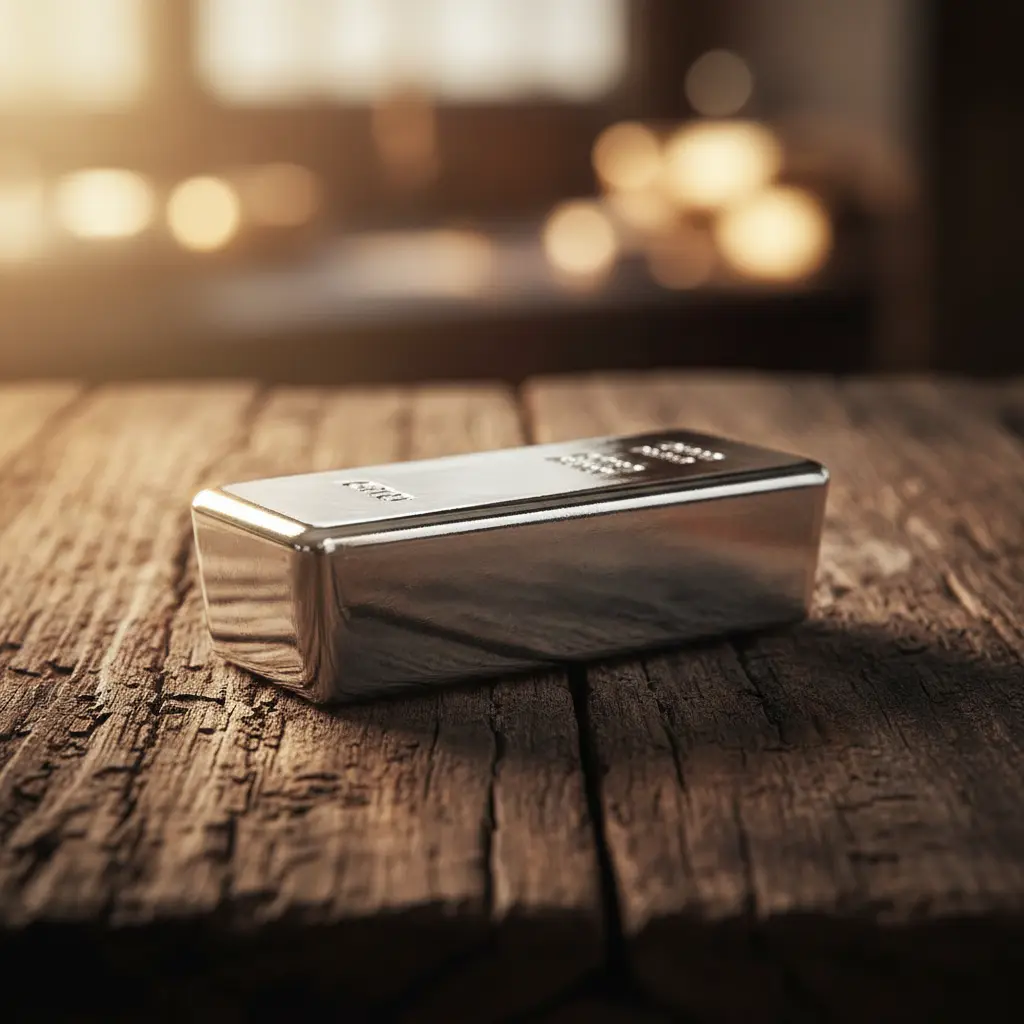
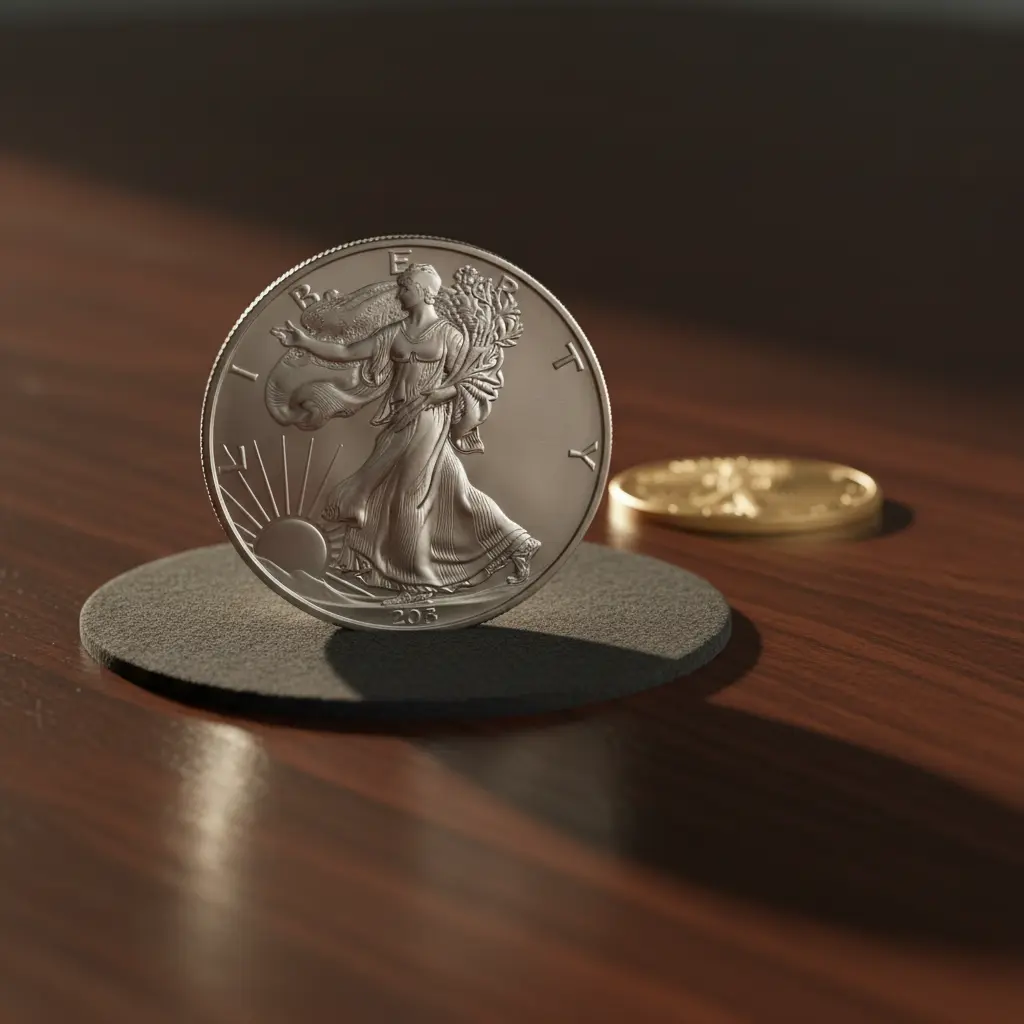
Accepted coins include 1 oz American Silver Eagles, Canadian Maple Leafs, and Austrian Philharmonics. Bullion bars qualify if stamped with exact weight, .999+ fineness, and an approved refiner hallmark (such as COMEX or ISO 9001). Rare, graded, or pre-1965 90% silver coins fail IRS standards.
Use the eligible precious metals guide to compare standards across account types. A comparison of IRA metal options also helps weigh silver against gold and platinum. Before buying, verify custodian approval in writing; even high-purity bars are rejected if the refiner lacks accreditation.
Custody and Documentation
An IRS-approved trustee must store physical bullion in an insured depository; home storage triggers immediate distribution taxes and penalties. The self-directed IRA model explains why account control is broader, not unlimited.
Before funding, check:
- the product comes from a COMEX-, LBMA-, or ISO-approved mint
- the invoice explicitly details weight, .999+ fineness, and refiner
- storage fees, insurance, and buyback procedures are transparent
Retain all dealer invoices and depository receipts. These records establish chain of custody and prove the asset meets statutory purity requirements.
Practical Selection Tips
Choose 1 oz sovereign coins for liquidity or 100 oz bars for lower premiums over spot. When holding silver in a precious metals IRA, account for higher storage volume per dollar value. Always verify eligibility before purchase and maintain comprehensive records.
Costs and Fees Associated with Silver IRAs
Establishing a silver IRA involves specific operational costs beyond spot metal prices. Custodians charge setup, administration, vaulting, and transaction fees that vary by provider. Before executing a transfer, request an itemized fee schedule covering both one-time and recurring charges. Federal tax guidelines governing contribution limits and retirement funding are detailed in Publication 590-A. Calculating total multi-year holding costs rather than relying on promotional rate waivers prevents fee drag from eroding investment gains.
Common costs to review
Custodians typically separate expenses into standard industry categories:
- Setup fees are one-time charges (typically $50 to $150) for account establishment and documentation.
- Annual administration fees cover custodial recordkeeping, IRS reporting, and compliance (ranging from $75 to $300).
- Storage and insurance charges fund secure depository vaulting, with commingled options averaging $100 to $150 and segregated storage $150 to $250 annually.
- Dealer spreads, shipping, and wire costs include buy/sell premiums over spot, insured transit, and wire transfer fees.
Some custodians waive initial setup fees for larger deposits but impose higher recurring rates. Always model a three-year cost projection: a provider charging a $50 setup fee and $250 annually ($800 total) costs more over three years than one charging $150 upfront and $180 annually ($690 total).
Comparing total costs
Evaluating custodians requires examining fee structures and operational terms. Determine whether annual administration fees are flat or percentage-based, as flat fees are far more cost-effective as balances grow. Ensure depository storage includes full all-risk insurance coverage and review liquidation bid-ask spreads before purchasing. Allocation strategy should reflect market trends, so review the silver outlook prior to locking in trades. For rollover protocols and IRS requirements, refer to this guide to gold IRA rules. Audit your annual account statements to verify that holding expenses remain aligned with net asset performance.
Comparative Analysis: When Silver Beats Gold in Investment
When evaluating precious metals for retirement portfolios, silver can outperform gold during expansions driven by industrial demand and compressed gold-to-silver ratios. A silver IRA suits investors seeking lower capital barriers and exposure to photovoltaics, automotive electrification, and advanced electronics. Conversely, gold offers superior liquidity, lower volatility, and proven systemic risk hedging. Strategic allocation depends on time horizon, liquidity needs, and risk tolerance. Before executing a rollover, review statutory guidelines and eligibility rules through this background on individual retirement accounts.
Where Silver Has an Edge
Silver’s lower spot price enables incremental dollar-cost averaging and flexible rebalancing. An investor deploying $10,000 can execute phased monthly purchases without being restricted by gold’s higher single-ounce unit cost. Industrial consumption accounts for over 50% of global silver demand, creating strong price momentum during manufacturing expansions. However, this dual utility creates higher beta and steeper drawdowns in recessions. Depository storage costs are also proportionately higher per dollar invested due to silver’s bulk. Custodians must confirm all storage schedules, dealer bid-ask spreads, and IRS-mandated .999 fineness ratings before executing physical bullion transfers.
When Gold Still Leads
Gold remains superior for wealth preservation, tight bid-ask spreads, and low-volatility risk mitigation. A blended self-directed IRA often uses a 70% gold to 30% silver allocation, rebalancing when the gold-to-silver ratio breaches key historical thresholds. Investors should confirm depository vaulting methods, verify custodian transaction fees, and ensure all holdings meet IRC Section 408(m) purity standards (.995 for gold, .999 for silver). Maintaining non-retirement cash reserves prevents premature liquidation of physical metals during market downturns.
Conclusion: Making Informed Decisions in Silver IRA Investments
Executing a sound silver ira strategy requires aligning physical asset allocations with your timeline, liquidity parameters, and risk profile. Evaluate custodian fee structures, IRS-approved depository safeguards, comprehensive transit insurance, and metal purity standards (.999 minimum). A compliant custodian should provide full fee transparency and documentation before you initiate an asset transfer.
Evaluate the Account Structure
Long-term investors often favor allocated storage for bullion, whereas those nearing required minimum distributions (RMDs) must prioritize liquidation speed. Confirm whether the silver ira account allows in-kind distributions and evaluate how flat versus asset-tiered custodial fees affect overall returns. Request and benchmark itemized fee schedules across competing custodians.
Apply a Disciplined Process
Maintain balanced exposure by treating silver as a targeted hedge—typically 5% to 10% of total portfolio value—rather than a substitute for cash reserves. Review dealer buyback spreads, depository audit protocols, and custodian credentials. For institutional-level guidance, speak with specialists before finalizing a rollover or transfer.
Review your asset allocation annually alongside spot price movements, IRS contribution caps, and withdrawal timelines. Rigorous custodian vetting and disciplined rebalancing are essential for protecting long-term capital.
Frequently Asked Questions
What types of silver bars and coins are eligible for a Silver IRA?
Only specific silver products meeting IRS purity standards (0.999 fine) are eligible, including American Silver Eagles, Canadian Silver Maple Leafs, and certain silver rounds or bars from approved refiners. Collectible or numismatic coins are generally not allowed.
What are the typical costs associated with setting up and maintaining a Silver IRA?
Costs can include account setup fees, annual administrative fees, storage fees for the physical silver (typically segregated or non-segregated), and transaction fees for buying or selling silver. These vary by custodian.
When might investing in silver be a better choice than gold for an IRA?
Silver can sometimes outperform gold during periods of strong industrial demand or heightened inflation, as it serves both as a precious metal and an industrial commodity. It also tends to be more volatile than gold, offering potential for higher gains (and losses).
How do I choose a custodian for my Silver IRA?
Look for a reputable custodian specializing in precious metals IRAs, with transparent fee structures, secure storage options (vaulted and insured), and good customer service. Ensure they handle all IRS compliance requirements for precious metal holdings.